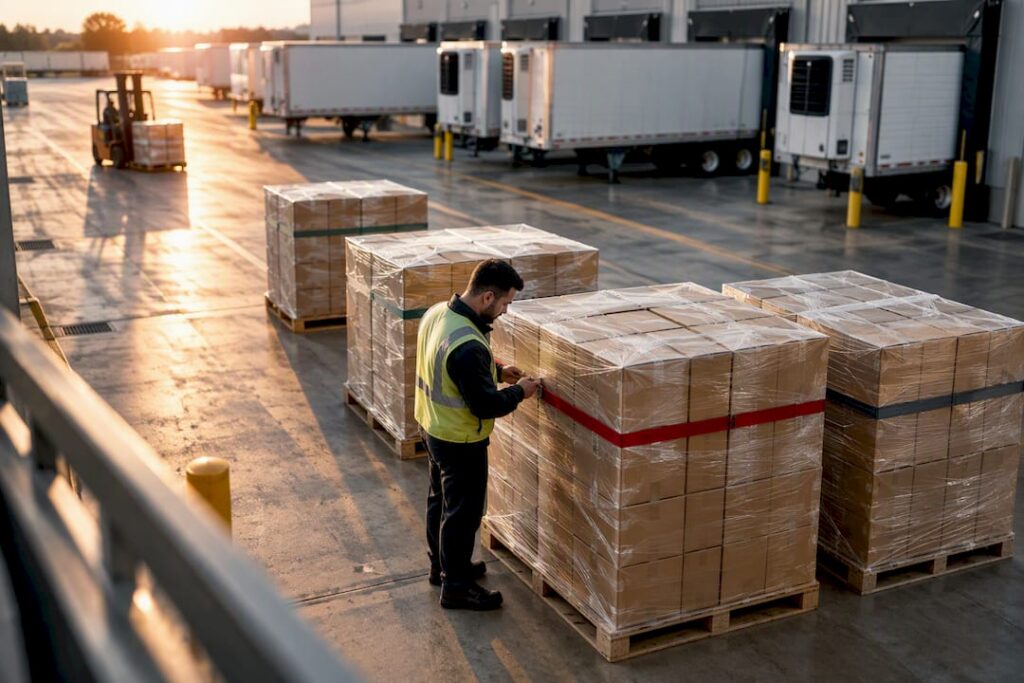
Wendy’s supply chain risk concentrates in four areas: a persistent human-rights enforcement gap in produce and meat sourcing, operational fragility in inventory and logistics, climate exposure across agricultural inputs, and thin governance transparency. These risks touch a network the Quality Supply Chain Co-op manages for more than 6,400 restaurants and roughly 20,000 farms and facilities, meaning a single upstream failure can ripple into margins, menu availability, and reputational capital fast.
TL;DR:
- Wendy’s supply chain faces significant human rights enforcement gaps, especially with upstream farms and ranches, where visibility and audit transparency are limited.
- Operational risks from inventory shortages, commodity price shocks, and cold-chain failures can cause quick menu disruptions and margin pressures, managed partly through AI automation.
- The company’s mitigation efforts include supplier audits, third-party assessments, and climate resilience programs, but enforcement outcomes and upstream transparency remain underreported.
- Dependence on Palantir’s AI platform introduces integration complexity, cybersecurity risks, and workforce adaptation challenges that could impact decision accuracy and resilience.
- Future risks hinge on disclosure of increased supplier evaluation coverage and upstream evaluation expansion, amid climate volatility and ongoing trade rule changes affecting costs.
Table of Contents
- How Is Wendy’s Supply Chain Structured?
- What Human Rights and Labor Risks Exist in Wendy’s Supply Chain?
- How Do Inventory and Logistics Disruptions Hit Wendy’s Operations?
- What Is Wendy’s Doing to Manage Supply Chain Risk?
- How Is AI Changing Wendy’s Supply Chain Risk Profile?
- What Should Investors Watch in Wendy’s Supply Chain?
- What Does Buywendys Track for Supply Chain Signals?
- How Do Tariffs and Trade Rules Affect Wendy’s Suppliers?
- A Short Outlook on Where This Risk Heads Next
- Track Wendy’s Supply Chain Signals With Structured Research
- Sources
- FAQ
How Is Wendy’s Supply Chain Structured?
Wendy’s does not run its own trucks or negotiate every beef contract directly. It relies on the Quality Supply Chain Co-op (QSCC), an independent purchasing cooperative that aggregates buying power across the system’s restaurants and negotiates with suppliers on behalf of franchisees and company-operated locations alike. QSCC’s scale, procurement for over 6,400 restaurants, gives Wendy’s leverage on price and quality specs that a single operator could never match.
The franchise model complicates accountability in a way that matters for anyone modeling supply chain management here. The majority of Wendy’s restaurants are franchised, which means the parent company sets sourcing standards but does not directly employ the workers preparing food or operate the trucks moving it. That structure pushes most Scope 3 emissions and much of the labor risk upstream, outside Wendy’s direct payroll and outside its most immediate line of sight.
Visibility drops sharply the further you move from the restaurant counter. A few points define where risk actually sits:
- Tier I suppliers (processors, distributors) are contractually bound to Wendy’s Supplier Code of Conduct and subject to audits.
- Upstream farms and ranches, the roughly 20,000 facilities in the broader network, often sit two or three tiers removed from any direct Wendy’s contract.
- Traceability tools like blockchain pilots and RFID tracking exist for select commodities but do not yet cover the full protein and produce portfolio.
That gap between Tier I oversight and upstream reality is where most fast food supply chain risks originate, not just for Wendy’s but across the quick-service category.
What Human Rights and Labor Risks Exist in Wendy’s Supply Chain?
Investor advocates have already put this question on the record. A 2021 SEC filing from the Franciscan Sisters of Allegany, filed as a Notice of Exempt Solicitation, argued that Wendy’s carries significant human-rights exposure in its produce and meat supply chains and asked management for concrete evidence that its Supplier Code of Conduct is actually enforced, not just published. That distinction between a written pledge and verified enforcement is the crux of the entire risk category.
The underlying exposures are familiar to anyone who has followed labor conditions in North American agriculture:
- Migrant and seasonal labor in tomato, lettuce, and produce fields, where wage theft and unsafe housing have been documented industry-wide.
- Processing plant line speeds and injury rates in beef and poultry facilities.
- Limited third-party visibility into subcontracted labor brokers who supply seasonal harvest crews.
Wendy’s public response leans on scale metrics rather than granular enforcement data. The company reported completing more than 13,000 Food Safety Assessments in 2024, alongside supplier audits and participation in EcoVadis sustainability scoring.
What the numbers do not show: neither the FSA count nor the EcoVadis participation rate discloses how many labor violations were found, how many suppliers were dropped for noncompliance, or how long corrective action took. That is precisely the disclosure gap the Franciscan Sisters filing flagged, and it remains the single most cited concern in shareholder engagement around Wendy’s supply chain management to date.
How Do Inventory and Logistics Disruptions Hit Wendy’s Operations?
Every quick-service chain juggles the same tension: carry too much inventory and working capital gets tied up; carry too little and a regional shortage turns into empty menu items on a Saturday night. Wendy’s has historically carried significant inventory balances, reflecting hedging against commodity volatility in beef, chicken, and potatoes as much as routine restocking.
Two real-world cases illustrate how this plays out operationally.
- Beef price shocks. Cattle supply tightening has periodically pushed wholesale beef costs sharply higher, forcing Wendy’s and its franchisees to absorb margin compression or raise menu prices, sometimes both at once.
- The Thin Mints/Frosty inventory imbalance. QSCC’s digital twin system flagged a network-wide shortage of a promotional item, while identifying surplus cases sitting in nearby distribution centers. Resolving that kind of allocation problem used to take a full day of manual coordination; the AI-assisted process cut it to roughly five minutes.
Logistics exposure extends beyond inventory counts into the physical movement of perishable goods. Cold-chain monitoring, RFID tagging pilots, and blockchain traceability tests are underway for select commodities, illustrating what traceability really means in practice, but coverage is uneven across the full supplier base.
| Disruption type | Example | Operational effect |
|---|---|---|
| Commodity price shock | Beef supply tightening | Margin compression, menu price adjustments |
| Inventory imbalance | Thin Mints/Frosty shortage | Resolved in minutes with AI vs. a day manually |
| Cold-chain failure | Temperature excursion in transit | Spoilage, potential food safety recall |
| Last-mile delay | Distribution center bottleneck | Localized stockouts, reduced same-store sales |
What Is Wendy’s Doing to Manage Supply Chain Risk?
Wendy’s public mitigation framework rests on three pillars: the Supplier Code of Conduct, the Animal Care Standards Program (ACSP), and third-party assessment through EcoVadis. The Supplier Code sets baseline expectations on labor practices, environmental compliance, and food safety, and Wendy’s says noncompliant suppliers face corrective action plans or removal from the network.
The ACSP has moved from a policy document into an actual measurement exercise. Wendy’s reports it is evaluating direct protein suppliers, and in some cases upstream suppliers, across beef, pork, chicken, egg, and dairy categories, using PAACO-certified auditors for egg supply specifically. That third-party certification detail matters because it signals an external check rather than a self-graded audit.
EcoVadis participation gives a rare quantifiable coverage metric: approximately 64% of suppliers in scope had completed an EcoVadis sustainability assessment as of the most recent reporting cycle. Wendy’s has also backed rancher-level programs through AgriWebb and AgSpire, aimed at building climate resilience into beef sourcing at the ranch level rather than only at the processor level.
Investors evaluating whether these programs are working, rather than just existing, should push for a specific KPI set:
- Percent of suppliers audited annually, broken out by tier.
- Corrective action closure rate and average time to close.
- Year-over-year change in EcoVadis coverage, not just the current snapshot.
- Supply continuity metrics: stockout frequency by category and region.
Pro Tip: Coverage percentages alone tell you almost nothing about enforcement quality. Cross-reference EcoVadis participation rates against the number of suppliers actually delisted for noncompliance, if Wendy’s discloses it, because a high assessment rate paired with zero terminations is a red flag, not reassurance. For a broader read on how these programs fit into Wendy’s environmental commitments, see Wendy’s sustainability initiatives.
How Is AI Changing Wendy’s Supply Chain Risk Profile?
QSCC’s partnership with Palantir Technologies is the most consequential operational change in Wendy’s procurement strategy in years. The rollout uses Palantir’s AIP platform in two phases: the first focused on decision support, giving supply chain planners real-time visibility into inventory positions across the network, and the second extending into full supply-chain management and waste prevention.

The practical payoff already showed up in the Thin Mints/Frosty case, where a digital twin of the distribution network caught a shortage and rerouted surplus stock in minutes instead of a day of phone calls and spreadsheet reconciliation. That kind of speed compounds across a network serving thousands of restaurants daily.
But digitalization does not eliminate risk, it relocates it. A few categories deserve investor attention:
- Integration complexity. Palantir’s platform has to reconcile data from thousands of suppliers, distributors, and point-of-sale systems, and inconsistent data quality undermines the model’s usefulness before it undermines anything visible to customers.
- Vendor concentration. Leaning heavily on a single AI provider for core supply-chain decisioning creates a dependency that did not exist five years ago.
- Cybersecurity exposure. A platform touching inventory, pricing, and supplier data becomes a higher-value target than the point-of-sale systems most fast food chains worried about a decade ago.
- Workforce adaptation. Planners and logistics staff need retraining to trust and correctly override an AI recommendation, and that transition period carries its own execution risk.
What Should Investors Watch in Wendy’s Supply Chain?
Several observable signals give investors an early read on whether these risks are materializing rather than staying theoretical. Menu item limitations at the restaurant level, even temporary ones, often surface before they show up in a quarterly earnings call. Rising inventory carrying costs relative to prior-year periods can flag either demand forecasting problems or deliberate hedging against expected commodity volatility, and the two look very different on a balance sheet.
Supplier audit failures, when disclosed, and repeat shareholder proposals on labor or environmental practices both signal that internal concerns have not been resolved through ordinary channels. Any material SEC disclosure referencing supply chain disruption or human-rights litigation would be the clearest escalation point of all.
A compact monitoring checklist for quarterly review:
- EcoVadis supplier coverage percentage, tracked year over year.
- Number of Food Safety Assessments completed versus the prior year’s 13,000-plus baseline.
- ACSP milestones: which protein categories have moved from direct-supplier to upstream-supplier evaluation.
- Inventory carrying costs relative to same-store sales growth.
- Frequency and substance of shareholder proposals at the annual meeting.
- Any beef, poultry, or produce price volatility flagged in earnings commentary.
These signals rarely move stock price on their own, but together they build the picture a single earnings release cannot. For a wider view of how these risks interact with valuation, see six tradeable Wendy’s investor risks to monitor.
What Does Buywendys Track for Supply Chain Signals?
Buywendys evaluates the fast-food chain through the lens of a franchised revenue model, where royalties and rents typically provide more predictable cash flow than store-level margins alone, alongside operational signals like AI-driven efficiency and free cash flow durability. Supply chain resilience feeds directly into that framework because a disrupted supply chain eventually shows up in franchisee unit economics, even when it does not immediately touch the parent company’s royalty stream.
A practical dashboard worth building includes:
- EcoVadis supplier assessment coverage, tracked against the 64% baseline.
- Annual Food Safety Assessment completions versus the 13,000-plus 2024 figure.
- ACSP milestone completions by protein category.
- Inventory carrying costs as a percentage of cost of sales, quarter over quarter.
- Any Palantir AIP phase-two rollout updates affecting waste reduction claims.
How Do Tariffs and Trade Rules Affect Wendy’s Suppliers?
Wendy’s sources beef, chicken, potatoes, and packaging materials through a supply chain that touches international trade policy more than most diners realize. Beef supply, in particular, has periodic exposure to import quotas and tariff schedules on foreign cattle and processed beef products, especially when domestic herd sizes contract and processors turn to imports to fill volume gaps.
Packaging materials, many of which rely on paper pulp, plastics, or aluminum components, carry their own tariff exposure depending on country of origin. A change in Section 232 or Section 301 tariff schedules on any of these inputs can raise landed costs for QSCC’s negotiated contracts, and those cost increases typically flow through to franchisee cost of goods sold before they show up anywhere in Wendy’s own reported margins.
Compliance obligations extend to import documentation, country-of-origin labeling for beef products, and customs classification accuracy, all handled primarily at the supplier and distributor level rather than by Wendy’s corporate directly. That distance from direct compliance responsibility is itself a risk factor: Wendy’s depends on QSCC and its Tier I suppliers to manage trade compliance correctly, and a customs violation or tariff misclassification several tiers upstream could still generate reputational and cost consequences that reach the parent brand. Investors modeling margin sensitivity should treat tariff policy shifts on beef and packaging inputs as a recurring, not one-time, variable.
A Short Outlook on Where This Risk Heads Next
Two signals deserve attention over the next several quarters: whether Wendy’s discloses any EcoVadis coverage increase beyond the 64% baseline, and whether ACSP evaluation actually expands into upstream suppliers rather than stalling at the direct-supplier tier. Watch both closely, because stagnation on either metric would suggest the enforcement gap flagged in the Franciscan Sisters filing remains unresolved.
The medium-term systemic risk is climate exposure to cattle and produce regions. Drought cycles in key ranching states could push beef costs structurally higher regardless of how well QSCC’s AI systems manage inventory. If Wendy’s goes two consecutive years without disclosing supplier delisting data alongside its audit counts, that is the point to escalate this risk explicitly in any valuation model or shareholder question.
— Benjamin
Track Wendy’s Supply Chain Signals With Structured Research
Reading a corporate responsibility PDF once a year tells you where Wendy’s says it stands. Tracking EcoVadis coverage, inventory carrying costs, and ACSP milestones quarter over quarter tells you whether that position is improving or eroding.
Buywendys built its restaurant stock analysis guide specifically for investors who want a repeatable framework rather than a one-time snapshot. It walks through how to weigh operational metrics like supply chain disclosure alongside franchise economics, cash flow, and dividend coverage, the same categories that determine whether a supply chain risk stays contained or eventually shows up in margin guidance. Start there to build your own quarterly monitoring routine around Wendy’s next earnings cycle.
Sources
Verify the claims in this article directly: Wendy’s own 2024 Corporate Responsibility Report covers Food Safety Assessments and ACSP progress. The SEC Notice of Exempt Solicitation filed by the Franciscan Sisters of Allegany lays out the human-rights enforcement concerns in shareholder language. Supply Chain Dive’s coverage of the Palantir partnership explains the phased AI rollout, and Supply Chain Digital’s reporting on beef sourcing details the AgriWebb and AgSpire de-risking programs.
- SEC filing: Notice of Exempt Solicitation (Franciscan Sisters of Allegany)
- Wendy’s co-op aims to integrate supply chain network | Supply Chain Dive
- Palantir reinvents Wendy’s supply chain network (PYMNTS)
FAQ
Is Wendy’s Struggling Financially?
Wendy’s is not in financial distress; the franchised model gives it steady royalty and rent income even when individual restaurant margins fluctuate. Supply chain cost pressures, particularly beef price volatility, can compress franchisee-level profitability without necessarily hitting Wendy’s own reported earnings the same way.
What Are the Biggest Supply Chain Risks Wendy’s Faces?
The four biggest categories are human-rights and labor enforcement gaps upstream, operational inventory and logistics disruption, climate and physical risk to agricultural sourcing, and governance transparency around audit and enforcement data. These risks touch a network of roughly 20,000 farms and facilities managed largely through the QSCC purchasing cooperative.
What Is the Current Issue With Wendy’s Supply Chain?
The most actively debated issue is the gap between Wendy’s published Supplier Code of Conduct and public evidence of its enforcement, a concern raised directly in a 2021 SEC shareholder filing. Wendy’s has responded with expanded Food Safety Assessments and EcoVadis participation, but detailed enforcement outcomes remain limited in public disclosures.
Why Are People Boycotting Wendy’s?
Consumer boycotts targeting Wendy’s have historically centered on labor conditions in produce supply chains, particularly tomato and lettuce sourcing tied to farmworker advocacy campaigns. These campaigns pushed Wendy’s toward stronger supplier code language, though critics argue enforcement transparency still lags the commitments made.
How Does Wendy’s Manage Supply Chain Risk Day to Day?
Wendy’s relies on the QSCC cooperative for procurement scale, the Supplier Code of Conduct and ACSP for supplier standards, and Palantir’s AIP platform for real-time inventory visibility across its distribution network. Third-party checks, including EcoVadis assessments and PAACO-certified auditors for eggs, add an external layer to that internal management structure.