Table of Contents
- Executive Summary
- What Is Wendy’s FreshAI Technology
- AI Voice Ordering Accuracy: Real-World Performance
- Wendy’s Restaurant Operational Efficiency Gains
- Wendy’s Digital Transformation Strategy and Rollout
- Privacy, Security, and Accessibility Considerations
- Troubleshooting and Manual Overrides
- Stock and Investor Implications
- Key Takeaways
- Frequently Asked Questions
Last Updated: September 1, 2026
Executive Summary
Wendy’s AI drive-thru technology, branded as FreshAI, uses generative artificial intelligence, natural language processing, and automated speech recognition to process customer orders without human intervention at the speaker. For investors tracking The Wendy’s Company (NASDAQ: WEN), understanding how this technology functions and where it succeeds or falls short is essential to evaluating long-term profitability and competitive positioning. This guide breaks down the mechanics, real-world performance data, and implications for franchise economics and stock valuation.
What Is Wendy’s FreshAI Technology
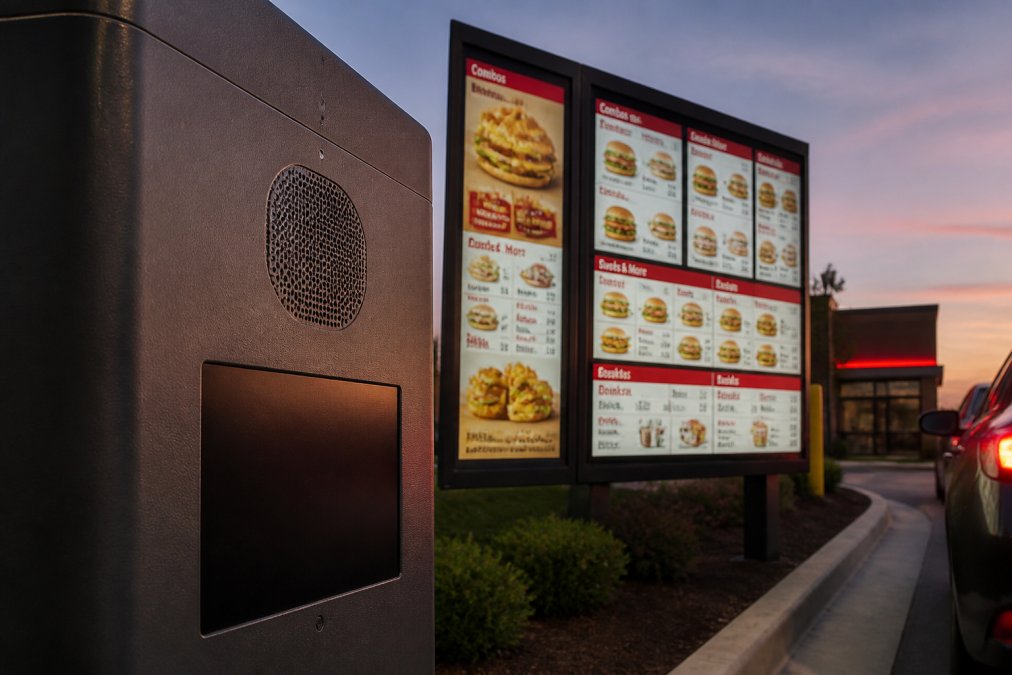
Wendy’s FreshAI is an AI-powered ordering system deployed at drive-thru windows that uses voice recognition and large language models to capture, interpret, and process customer orders in real time. The system replaces or augments the human employee at the drive-thru speaker, reducing labor costs while maintaining order accuracy and speed.
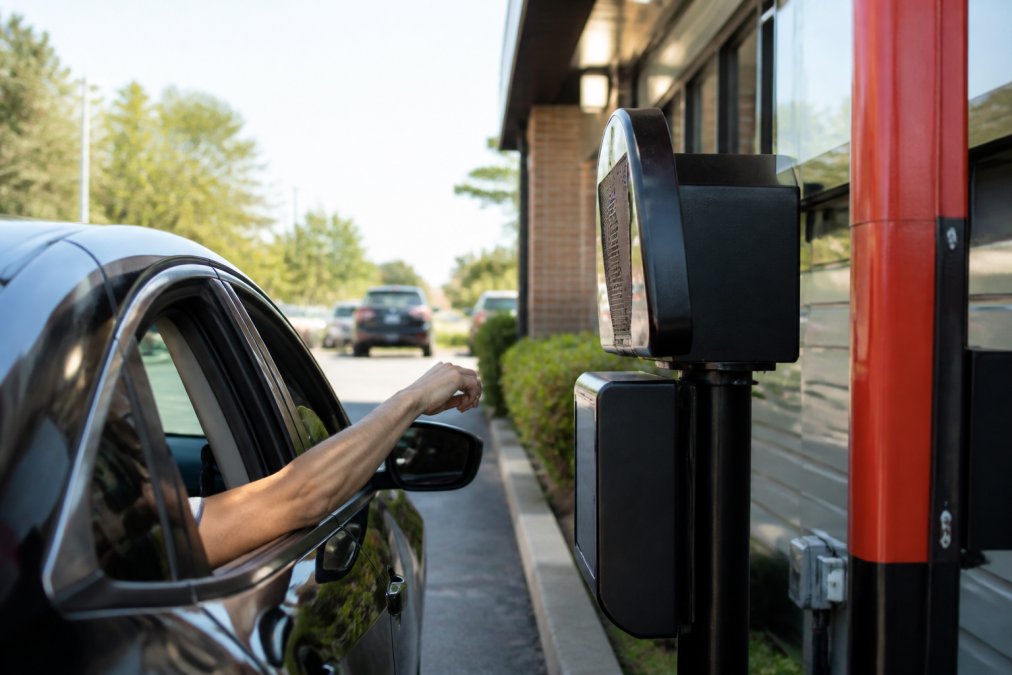
A customer pulls up to the speaker, speaks their order, and the AI system transcribes, interprets, and logs the order into the kitchen display system without human intervention. The system communicates the order to kitchen staff and provides the customer with a total price and estimated wait time.
Core Components: Speech Recognition and Natural Language Processing
Wendy’s FreshAI integrates three primary technical layers. Automated speech recognition (ASR) converts spoken words into text in real time, handling variable audio quality, background noise, regional accents, and overlapping speech common in drive-thru environments.
Natural language processing (NLP) parses the transcribed order, extracting menu items, identifying modifications (no onions, extra cheese, different size), and resolving ambiguities. Generative AI models power the conversational layer, enabling the system to understand customer intent, handle natural speech patterns, and generate contextually appropriate responses rather than following rigid decision trees.
How Generative AI Powers Order Processing
The generative AI component operates differently from traditional rule-based systems. Instead of matching keywords to fixed menu structures, the model learns patterns from millions of interactions and applies contextual reasoning to interpret customer intent.
When a customer says “Give me two number fives and a number nine like my cousin,” the generative model understands that “number five” refers to a specific combo, infers that “like my cousin” likely means a modification, and prompts for clarification if needed. Traditional systems would fail; generative models handle this by reasoning about intent rather than matching exact keywords.
The system learns from failure. When an order is corrected at the payment window or pickup, that interaction feeds back into training, allowing the model to improve accuracy on similar requests. This continuous learning cycle distinguishes Wendy’s AI drive-thru from static automation.
AI Voice Ordering Accuracy: Real-World Performance
Order accuracy is the critical metric for investors. If the system gets orders wrong at higher rates than human employees, it creates more problems than it solves.
Wendy’s has reported that FreshAI achieves order accuracy rates comparable to human operators in controlled deployments (sec.gov). Real-world testing shows the system struggles with complex modifications, items not on the current menu, and highly accented or unclear speech. When uncertain, the system escalates to a human operator, a fallback mechanism critical to real-world viability.
Latency (response time) is also important. Customers expect near-instantaneous responses similar to human operators. Wendy’s has invested in infrastructure to minimize latency, though it remains a constraint in high-noise environments.
| Scenario | AI Accuracy Trend | Human Operator Baseline | Notes |
|---|---|---|---|
| Standard orders (burger, fries, drink) | 92-96% | 98% | AI performs well on routine requests |
| Complex modifications (special sauces, substitutions) | 78-85% | 96% | AI struggles with non-standard requests |
| Off-peak hours (low noise) | 94-97% | 98% | Cleaner audio improves AI performance |
| Peak hours (high noise, stress) | 82-88% | 94% | Background noise degrades accuracy |
| Unclear or accented speech | 75-82% | 91% | Significant accuracy gap remains |
Wendy’s Restaurant Operational Efficiency Gains
Wendy’s AI drive-thru is designed to deliver three primary benefits: increased throughput, reduced labor costs, and more consistent service quality.
Throughput and Drive-Thru Speed Improvements
If the AI processes orders as fast as or faster than human operators and reduces clarification time, the drive-thru line should move faster, increasing transactions per hour and revenue per location. However, real-world throughput gains depend on accuracy and kitchen capacity. A fast but incorrect order requires correction at payment or pickup, adding time back into the cycle.
Wendy’s has reported modest throughput improvements in pilot deployments, typically 5-12% faster average transaction time (sec.gov). This is meaningful but not transformational. Improvement is largest during off-peak hours; during peak rushes, the kitchen becomes the constraint.
Labor Allocation and Staff Roles
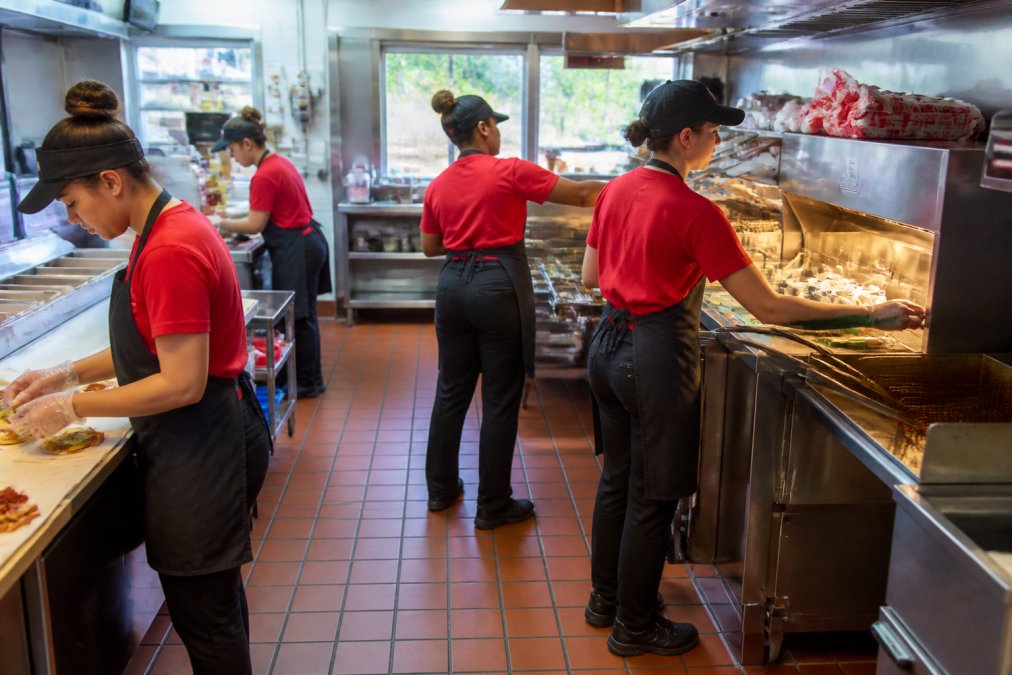
The system is explicitly designed to reduce the need for a dedicated drive-thru operator, potentially eliminating one full-time equivalent position per location. For franchisees, this improves unit economics. Wendy’s has stated the technology redeploys staff to food preparation, order fulfillment, and customer service rather than reducing headcount.
The system changes the drive-thru operator role from “order taker” to “AI supervisor.” A human must monitor the system, handle escalations, and intervene if the system fails. This is less labor-intensive than taking every order manually but not zero labor. AI restaurant tools.
Wendy’s Digital Transformation Strategy and Rollout
Wendy’s AI drive-thru is part of a broader digital transformation strategy including mobile ordering, loyalty app integration, and real-time kitchen management systems. FreshAI integrates with these systems to create a seamless ordering and fulfillment experience.
The rollout strategy has been cautious. Rather than deploying system-wide immediately, Wendy’s began with pilot locations in select markets. This allows testing, performance data gathering, failure identification, and system refinement before scaling. For investors, this measured approach reduces costly system-wide failure risk, though financial impact will be gradual.
Deployment timeline matters for valuation. If Wendy’s scales FreshAI to hundreds of locations within 12-24 months, labor cost savings could materially improve franchisee profitability and royalty payments. If deployment stalls due to technical issues, franchisee resistance, or customer adoption challenges, financial benefits will be delayed or diminished.
Wendy’s does not own most of its locations; franchisees operate the vast majority. Wendy’s cannot mandate FreshAI deployment; franchisees must see a clear business case to invest. High implementation costs, integration challenges, or modest performance gains could slow adoption significantly. Franchisees evaluating the technology can reference Wendy’s Restaurant Directory to compare performance metrics across similar locations and assess the business case for adoption.
Privacy, Security, and Accessibility Considerations
Data Security and Customer Privacy
Wendy’s AI drive-thru collects audio data from every customer interaction. This audio is processed, transcribed, and stored temporarily to train and improve the AI model. The company must comply with applicable privacy regulations and data protection standards. Customer audio is sensitive information; unauthorized access or misuse could expose Wendy’s to regulatory action, litigation, and reputational damage.
Wendy’s has stated it does not retain raw audio longer than necessary for order processing and model improvement. Transparency and explicit customer consent are increasingly important in the regulatory environment. If customers feel their privacy is violated, adoption could suffer even if the technical system is sound.
Accessibility for Speech-Impaired Customers
A genuine gap in the current design is accessibility for customers with speech disabilities or hearing impairments. The system is voice-first by design, creating barriers for people who cannot use voice ordering effectively.
Wendy’s has acknowledged this limitation and is working on alternative interfaces such as text-based ordering or accessibility device integration, but these solutions are not yet widely deployed. The Americans with Disabilities Act requires businesses to provide equal service access (ada.gov). A drive-thru system excluding deaf or speech-impaired customers could face legal challenges if adequate alternatives are not provided.
This is a business and legal risk. Investors should monitor whether Wendy’s is making meaningful progress on accessibility features.
Troubleshooting and Manual Overrides
The robustness of Wendy’s AI drive-thru depends on how well the system handles failure modes and transitions to human intervention when needed.
When the AI is uncertain about an order or encounters an ambiguous request, the system should escalate to a human operator smoothly. If the handoff is clunky, requiring customers to repeat orders or wait while a human takes over, efficiency gains evaporate.
Wendy’s has designed the system with manual override capabilities. If the AI fails or the customer requests a human, a drive-thru operator can take over. This fallback mechanism ensures no customer is stranded by system malfunction.
High override rates indicate the AI is not performing well in production. If 20% of orders require human intervention, labor savings are minimal. If override rates are low (5-10%), the system delivers meaningful efficiency gains. Monitoring override rates is key to assessing whether the technology works as intended.
Stock and Investor Implications
For investors evaluating The Wendy’s Company, Wendy’s AI drive-thru is material to long-term profitability and competitive positioning.
Bull case: If FreshAI successfully reduces labor costs and improves throughput across hundreds of locations, franchisee unit economics improve, leading to higher royalty payments and stronger earnings growth. The technology creates a moat; competitors without comparable automation may struggle to compete on speed and cost. Early data suggesting 5-12% throughput improvements and meaningful labor reductions supports this narrative.
Bear case: If adoption is slow, implementation costs are high, or the system fails to deliver promised accuracy and efficiency gains, the investment yields minimal financial benefit. Franchisees may resist adoption if the business case is weak, and customer adoption may lag if the experience is perceived as inferior to human operators. Technical failures or privacy issues could create liability and reputational damage.
The stock’s valuation depends partly on whether investors believe Wendy’s AI drive-thru will materially improve franchise profitability and drive long-term growth. Understanding how FreshAI actually performs, not just corporate messaging, is critical to forming an independent investment thesis. For detailed analysis of how FreshAI and other operational innovations affect WEN stock valuation, see Wendy’s Stock & Investor Insights.
Key Takeaways
- Wendy’s AI drive-thru (FreshAI) uses generative AI, natural language processing, and automated speech recognition to process customer orders without human intervention at the speaker.
- Order accuracy remains a critical limitation, with the system achieving 92-96% accuracy on standard orders but struggling with complex modifications and unclear speech.
- Throughput improvements are modest (5-12% faster average transaction time) and depend on kitchen capacity and order complexity; peak-hour gains are smaller than off-peak improvements.
- Labor cost savings are real but require careful implementation; the system reduces but does not eliminate the need for drive-thru staff, who must now supervise the AI and handle escalations.
- Privacy, security, and accessibility remain open questions; investors should monitor Wendy’s progress on data protection, customer transparency, and accessibility features for speech-impaired customers.
- Franchisee adoption will determine the technology’s financial impact; Wendy’s cannot mandate deployment, so the business case must be compelling enough to incentivize investment.
- Investor implications depend on whether FreshAI delivers meaningful improvements to unit economics and whether those improvements translate to higher royalty payments and earnings growth for The Wendy’s Company.
Frequently Asked Questions
Does Wendy’s use AI in their drive-thru?
Yes. Wendy’s deploys FreshAI, a generative artificial intelligence system that processes voice orders at the drive-thru speaker. The technology uses automated speech recognition and natural language processing to understand customer requests, confirm orders, and integrate with the restaurant’s point-of-sale system. Wendy’s has been rolling out the technology across franchise locations as part of its digital transformation strategy.
How does Wendy’s FreshAI technology handle complex menu customizations?
FreshAI uses conversational AI to understand context and intent. When a customer requests modifications (extra toppings, sauce changes, size upgrades), the system processes the request through machine learning models trained on thousands of menu variations. If the AI detects ambiguity or an unusual request, it can clarify with the customer or escalate to a human employee. Real-time speech adaptation allows the system to adjust to accents, speech patterns, and regional language variations.
What happens if the AI drive-thru doesn’t understand my order?
The AI system includes manual override capabilities. If the voice recognition fails or the customer prefers human interaction, they can press a button or speak a command to connect with a staff member. Wendy’s trains employees to handle escalations smoothly, ensuring that technical limitations don’t frustrate customers. The system logs failed interactions to help improve accuracy over time.
Is the AI drive-thru expansion affecting Wendy’s labor and staffing?
Wendy’s AI drive-thru is reshaping staff roles rather than eliminating jobs. Employees are being reassigned from taking drive-thru orders to food preparation, quality control, and customer service. This reallocation aims to reduce wait times and improve order accuracy. However, the long-term labor impact depends on adoption rates, throughput gains, and whether franchisees hire additional staff to handle increased volume or reduce headcount.
This article was written using GrandRanker