Table of Contents
- Executive Summary
- What Makes Wendy’s Restaurant Stand Out in Fast Food
- Wendy’s AI Drive-Thru Technology: How It Works and Why It Matters
- Menu Offerings, Pricing, and Limited-Time Offers
- The Wendy’s Company Stock Analysis: Franchise Model and Growth
- Wendy’s Franchise Business Model: What Investors Need to Know
- Nutritional Information, Allergen Guides, and Dietary Customization
- Store Locator, Hours, and Delivery Options
Last Updated: August 27, 2026
Executive Summary
Wendy’s restaurant operates as a publicly traded fast-food chain with a differentiated market position built on fresh-made beef, advanced AI-driven technology, and a franchise-heavy business model. For investors evaluating The Wendy’s Company (NASDAQ: WEN), understanding the interplay between menu strategy, operational innovation, and franchise economics is essential.
Buy Wendy’s provides independent research and analysis for retail investors interested in WEN stock, franchise economics, and the company’s strategic use of AI technology in drive-thru operations. For those tracking operational performance and competitive positioning, Wendy’s Restaurant Reviews and Wendy’s Restaurant Directory offer detailed insights into individual location performance and system-wide trends.
What Makes Wendy’s Restaurant Stand Out in Fast Food
Wendy’s restaurant competes by emphasizing fresh-made beef, customizable menu options, and digital-first ordering. The core competitive advantage centers on two operational pillars: ingredient sourcing and technology adoption.
Fresh-Made Beef and Menu Differentiation
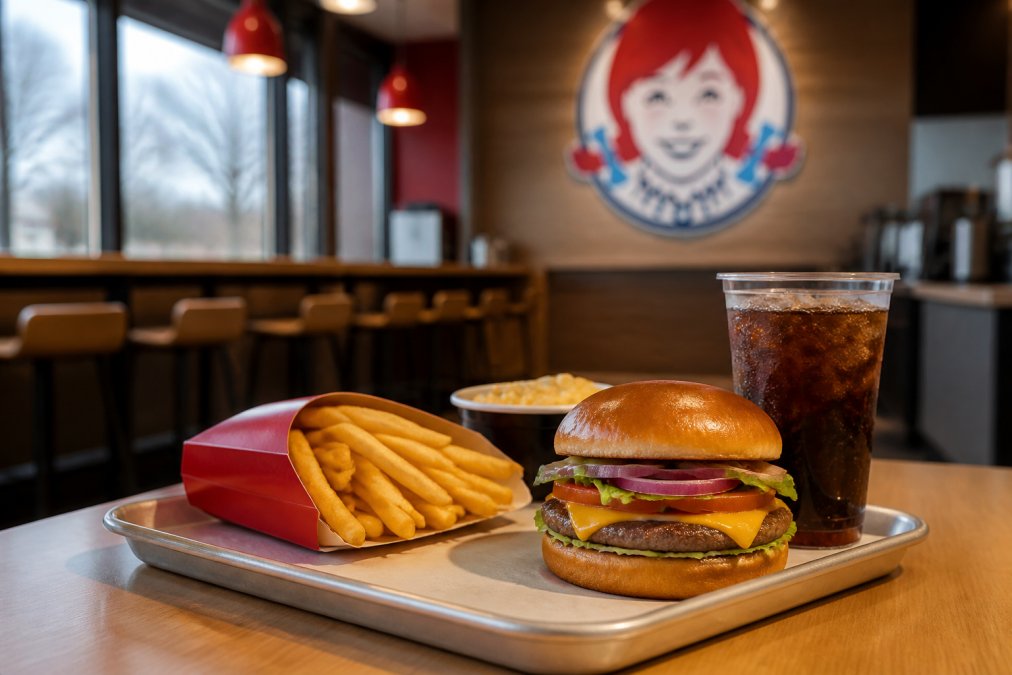
Fresh-made beef is the cornerstone of Wendy’s restaurant brand identity. Unlike competitors using frozen beef patties, Wendy’s restaurant locations receive fresh beef deliveries and prepare patties in-store. This operational choice affects inventory management, food waste rates, and labor scheduling at the franchise level.
The fresh beef positioning serves multiple stakeholder interests. For customers, it supports premium-quality perception. For franchisees, it justifies menu pricing and supports margin structure. For investors, it represents a defensible brand attribute difficult for competitors to replicate without supply chain restructuring.
Menu customization follows logically from fresh-made preparation. Wendy’s restaurant customers can request modifications to beef temperature, toppings, and condiments that require real-time assembly rather than reheating standardized products.
Digital Ordering and Delivery Integration
Wendy’s restaurant has integrated digital ordering as a core operational channel. Mobile app ordering, in-app loyalty rewards, and third-party delivery partnerships create multiple revenue streams and customer touchpoints beyond traditional dine-in and drive-thru transactions.
Digital ordering data flows directly into operational planning. Order volume forecasting, ingredient prep, and labor scheduling increasingly depend on real-time digital order visibility. Delivery integration through third-party platforms expands addressable market beyond drive-thru accessible locations, though delivery economics involve commission fees that affect unit-level profitability differently than drive-thru-only models.
Wendy’s AI Drive-Thru Technology: How It Works and Why It Matters
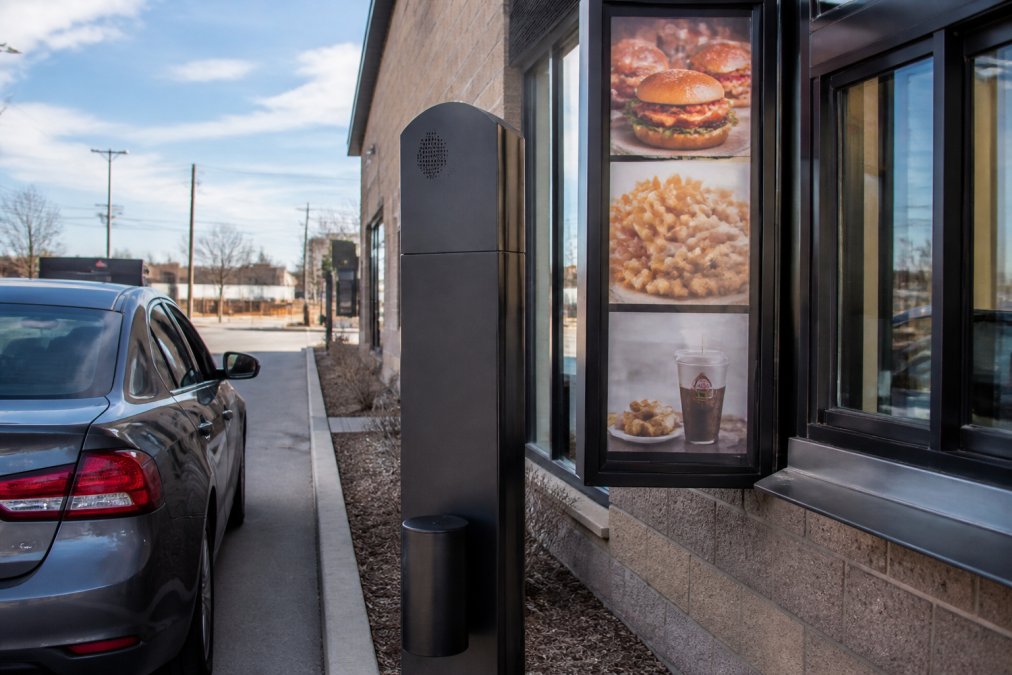
Wendy’s restaurant has deployed FreshAI, an AI-powered drive-thru ordering system designed to improve order accuracy, reduce labor costs, and increase throughput. FreshAI uses voice recognition and natural language processing to take drive-thru orders without human cashiers, processing customer speech, clarifying ambiguous requests, and transmitting orders to kitchen staff.
FreshAI and Order Accuracy
Order accuracy directly affects customer satisfaction and operational efficiency. Incorrect orders require remakes, consuming ingredients, labor, and time. FreshAI addresses this by standardizing order capture and reducing variables introduced by human cashiers during high-stress periods.
The AI system learns from interaction patterns. Repeat customers, regional menu variations, and common customization requests become embedded in the model over time. Accuracy metrics matter to both franchisees and corporate operations, as lower error rates typically correlate with higher customer satisfaction and repeat visit frequency.
Impact on Labor and Operating Margins
FreshAI deployment reduces drive-thru cashier headcount requirements. Automating order capture allows operators to redeploy staff to food preparation and quality control.
Labor cost reductions directly improve operating margins at the unit level. However, implementation costs matter. FreshAI requires hardware installation, software licensing, staff retraining, and ongoing technical support. Franchisees with lower-volume locations may struggle to achieve payback periods short enough to justify adoption.
Menu Offerings, Pricing, and Limited-Time Offers
Wendy’s restaurant menu strategy balances core items, seasonal offerings, and limited-time promotions. Menu economics directly affect franchise profitability because food cost percentages drive contribution margins. For detailed tracking of menu changes and promotional cycles, Wendy’s Menu Tracker provides comprehensive visibility into pricing strategy and limited-time offer performance across the system.
The core menu includes hamburgers, cheeseburgers, chicken sandwiches, salads, and breakfast items. Wendy’s restaurant emphasizes menu customization, allowing customers to request specific beef temperatures, toppings, and condiment combinations.
Core Menu Categories and Combo Meals
Combo meals bundle a sandwich, fries, and beverage at a fixed price. Combo pricing strategy affects customer transaction value and food cost percentages. Chicken sandwiches represent a growing category, offering lower food costs than beef and appealing to customers seeking dietary variety. Salads serve customers with different dietary preferences and expand addressable customer segments.
Breakfast Menu and Meal Deals
Breakfast represents a distinct daypart with different customer traffic patterns and food cost profiles. Breakfast traffic typically peaks between 6-10 AM, creating operational scheduling challenges for franchisees (peer-reviewed research). Meal deals bundle breakfast items at promotional pricing to drive volume during slower periods and create habit formation that drives repeat visits during higher-value dayparts.
Breakfast profitability depends on ingredient costs and labor scheduling efficiency. Franchisees optimize breakfast through portion control, waste reduction, and labor scheduling discipline.
The Wendy’s Company Stock Analysis: Franchise Model and Growth
The Wendy’s Company operates as a publicly traded holding company that franchises the Wendy’s restaurant brand. Corporate revenue flows primarily from franchise royalties rather than company-operated restaurants. AI menu automation.
The Wendy’s Company generates revenue through three channels: franchise royalties (typically 5.5% of franchisee sales), rent from franchisee-leased properties, and corporate-operated restaurant sales (sec.gov). Franchise royalties represent the largest revenue component and scale with system-wide sales volume. Investors tracking corporate performance and shareholder value should consult Wendy’s Stock & Investor Insights for detailed financial analysis and strategic updates.
Franchise Economics and Store Footprint
Wendy’s restaurant operates approximately 6,800 locations globally, with roughly 6,100 in the United States (sec.gov). The vast majority are franchised rather than company-operated. This asset-light model allows The Wendy’s Company to scale revenue without proportional capital investment.
Franchisee economics determine system health and expansion potential. A Wendy’s restaurant franchisee must invest capital for build-out, equipment, and working capital. Operating margins depend on location quality, labor costs, food costs, and rent. Store footprint concentration affects competitive positioning and real estate use, with dense markets supporting supply chain efficiency but increasing cannibalization risk.
Dividend Sustainability and Investor Returns
The Wendy’s Company has maintained a consistent dividend policy, returning capital to shareholders through regular quarterly distributions. Dividend sustainability depends on free cash flow generation and management’s capital allocation priorities.
Free cash flow equals operating cash flow minus capital expenditures. The Wendy’s Company requires capital for corporate infrastructure and technology systems. Franchisee capital requirements flow through the franchising process rather than corporate balance sheets, supporting free cash flow generation.
Dividend sustainability also depends on debt levels and refinancing costs. Rising interest rates increase debt service costs, reducing free cash flow available for dividends. Investors should monitor debt-to-EBITDA ratios and interest coverage metrics to assess dividend safety.
Wendy’s Franchise Business Model: What Investors Need to Know
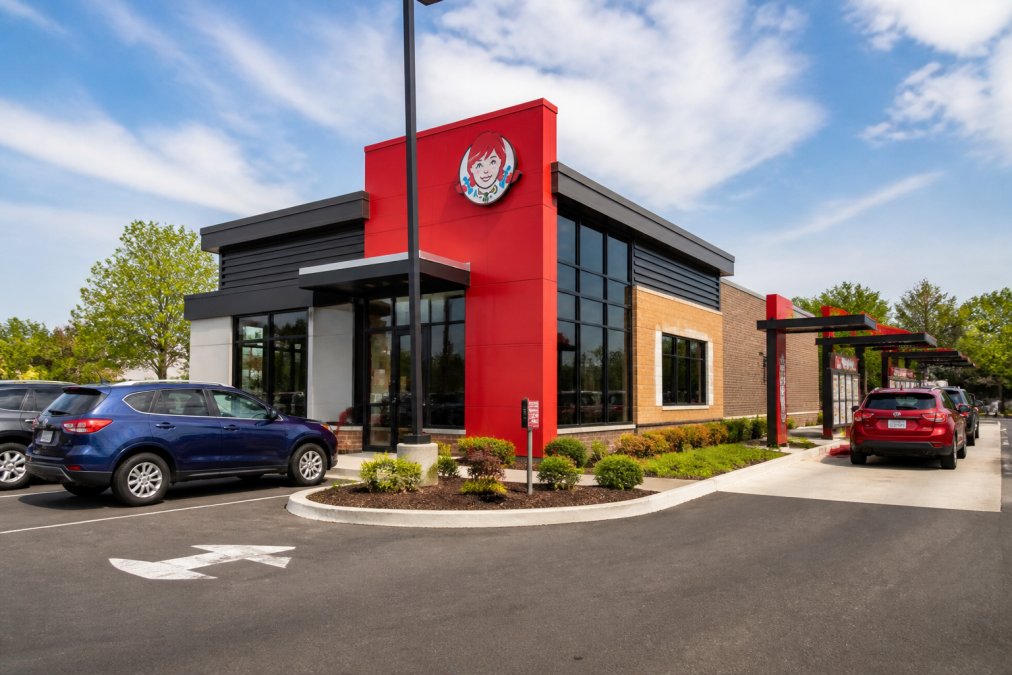
The Wendy’s Company operates a franchise-heavy model where franchisees own and operate individual restaurant locations. Franchisees pay upfront fees, ongoing royalties, and rent to The Wendy’s Company in return for brand rights, operating support, technology systems, and marketing resources.
Franchisee Requirements and Support
Wendy’s restaurant franchisee requirements include minimum net worth, liquid capital, and management experience. The Wendy’s Company screens applicants to assess financial stability and operational capability. Support systems include training programs, operational manuals, technology platforms, and field support staff. Franchisees access centralized procurement for food, packaging, and equipment, providing scale advantages. Technology support has become increasingly important as digital ordering, loyalty programs, and point-of-sale systems become central to operations.
Unit Economics and Profitability
Wendy’s restaurant unit economics vary significantly by location. High-volume locations in dense urban areas or strong suburban markets generate higher revenue per square foot and lower food cost percentages. Franchisees optimize profitability through operational discipline: labor scheduling efficiency, food waste reduction, portion control, and local marketing. Corporate royalties and rent represent fixed obligations regardless of profitability, creating leverage where strong locations generate outsized profits while weak locations quickly become unprofitable.
Nutritional Information, Allergen Guides, and Dietary Customization
Wendy’s restaurant provides nutritional information and allergen guides to support customer dietary choices and regulatory compliance. Nutritional data is available through multiple channels: in-restaurant signage, mobile app, website, and third-party aggregators.
Allergen information is critical for food safety and liability management. Wendy’s restaurant identifies major allergens (peanuts, tree nuts, dairy, shellfish, eggs, soy, wheat) in menu items and cross-contact risks during preparation. Customers with severe allergies should verify allergen information directly with location staff rather than relying solely on published data.
Dietary customization options support customers with specific requirements. Vegetarian customers can order sandwiches without meat or substitute plant-based proteins. Customers tracking macronutrients can request modifications to reduce calories or adjust fat and protein ratios. Wendy’s restaurant’s made-to-order preparation model supports this customization better than competitors using pre-assembled products.
Store Locator, Hours, and Delivery Options
Wendy’s restaurant locations operate with varying hours depending on market characteristics and franchisee decisions. Most locations open between 6-7 AM and close between 10 PM and midnight. Store locator tools help customers identify nearby Wendy’s restaurant locations and verify current hours through the mobile app, website, and third-party mapping services. The Wendy’s Restaurant Directory provides comprehensive location data and operational details for individual restaurants across the system.
Delivery options have expanded significantly as third-party platforms (DoorDash, Uber Eats, Grubhub) captured market share. Wendy’s restaurant participates in these platforms to reach customers who prefer home delivery. However, delivery economics involve commission fees that reduce franchisee profitability relative to drive-thru or dine-in sales.
Key Takeaways
-
Fresh-made beef and customization define Wendy’s restaurant competitive positioning and support premium pricing relative to value competitors using frozen or pre-assembled products.
-
FreshAI technology represents material margin opportunity for franchisees through labor cost reduction and order accuracy improvement, though implementation costs and adoption timelines vary by location type.
-
Franchise model economics determine system health and shareholder returns. Franchisee profitability depends on location quality, operational discipline, and labor cost management, factors that directly affect corporate royalty revenue and dividend sustainability.
-
Unit economics variation creates performance dispersion across the franchise system. High-volume locations achieve strong profitability while lower-volume locations struggle, affecting franchisee retention and system expansion.
-
Digital ordering and delivery expand addressable market but introduce operational complexity and margin pressure through third-party commission fees.
For investors evaluating WEN stock, the core thesis rests on whether FreshAI deployment can materially improve franchise unit economics without creating franchisee adoption friction. Sustained dividend capability depends on maintaining healthy franchisee profitability that drives system-wide sales growth and corporate royalty revenue.
Frequently Asked Questions
What technology is Wendy's restaurant implementing in its drive-thru operations?
Wendy's restaurant has deployed FreshAI, an AI-powered ordering system that improves accuracy and reduces wait times at the drive-thru. The technology uses voice recognition and machine learning to capture orders more precisely, reducing errors and enhancing the customer experience. For investors, this matters because improved order accuracy and faster throughput can increase transaction volume and reduce labor costs per order, directly impacting franchise profitability and corporate royalty revenue.
How does Wendy's restaurant maintain its 'fresh, never frozen' beef standard?
Wendy's restaurant uses fresh, never frozen beef in its signature cheeseburgers and sandwiches, a core differentiator in the fast food market. The company's supply chain is designed to deliver fresh beef to franchises regularly, supporting the quality promise that justifies premium positioning versus competitors. This commitment to ingredient sourcing affects food costs and operational complexity, factors relevant to understanding franchise unit economics and long-term competitive moat.
Why is The Wendy's Company stock analysis important for understanding restaurant performance?
The Wendy's Company stock analysis reveals how restaurant operations, franchise growth, and technology investments translate into shareholder returns. Key metrics include same-store sales growth, franchisee profitability, dividend sustainability, and capital allocation. Understanding these drivers helps investors assess whether the stock is undervalued or overvalued, and whether the company's strategic initiatives like AI drive-thru deployment are actually moving the needle on earnings and cash flow.
What is the Wendy's franchise business model and how does it affect investors?
The Wendy's franchise business model is primarily asset-light: The Wendy's Company owns most restaurants but operates them through franchisees, collecting royalties on sales and rent. This model generates recurring, predictable revenue with lower capital intensity than company-operated stores. Investors benefit from stable cash flows, but must monitor franchisee health, unit growth rates, and same-store sales trends. Strong franchisee economics support long-term dividend payments and stock price appreciation.
This article was written using GrandRanker