
Table of Contents
- Executive Summary
- Earnings Misses and Margin Pressure Drive Share Price Swings
- WEN Short Interest Analysis and Retail Investor Activity
- Wendy’s Stock Price Prediction 2025: Sector Headwinds and Consumer Discretionary Risk
- WEN Earnings Report Analysis: What Moves the Stock Most
- AI Drive-Thru Technology: Speculative Valuation vs. Fundamental Impact
- Macroeconomic Factors and Market Sentiment
- Key Takeaways
Last Updated: August 19, 2026
Executive Summary
Wendy’s stock (NASDAQ: WEN) exhibits above-average volatility compared to broader fast-food peers. This guide examines seven structural factors that drive price swings: earnings misses that compress margins, retail investor activity and short interest dynamics, sector headwinds affecting consumer discretionary spending, earnings call surprises, the speculative premium on AI drive-thru technology, macroeconomic sensitivity, and take-private deal speculation. Understanding these drivers helps individual investors distinguish between noise and genuine shifts in fundamental value. Wendy’s Stock & Investor Insights provides institutional-grade analysis of these dynamics to help retail investors form independent views on WEN’s risk profile and valuation.
Earnings Misses and Margin Pressure Drive Share Price Swings
Why Wendy’s stock is volatile often traces directly to earnings execution. The company operates in a margin-sensitive business where same-store sales growth, labor costs, and commodity prices move the needle quickly. When quarterly results miss consensus expectations, the stock typically sells off sharply because investors reassess the earnings power of the franchise model.

Wendy’s franchise economics depend on franchisee profitability. If labor inflation or food costs squeeze unit economics faster than the company can raise menu prices, franchisees reduce capital spending and growth plans. This shows up in comparable sales trends and same-store sales growth, which are the primary drivers of investor sentiment. A miss on these metrics often triggers a 5-10% single-day decline because the market reprices the long-term cash flow generation of the system.
The company’s exposure to commodity inflation, beef, chicken, potatoes, and packaging, creates earnings volatility that is difficult to predict. Hedging strategies help, but imperfect commodity price forecasting means guidance revisions are common. Investors react sharply to margin compression signals because they signal lower returns on franchisee capital, which eventually reduces new unit development and system growth.
Operating leverage works both ways. Small misses on sales growth can translate to disproportionate earnings declines because fixed costs don’t decline proportionally. This amplifies stock price moves on earnings surprises. A 2-3% miss on same-store sales can easily produce a 10-15% earnings miss if margins are already under pressure, triggering outsized stock reactions.
WEN Short Interest Analysis and Retail Investor Activity
Short interest in Wendy’s stock has periodically spiked, creating conditions for sharp rallies when short sellers cover positions. This dynamic is distinct from fundamental value discovery and adds a layer of speculative volatility that has nothing to do with restaurant operations or earnings power.
When short interest reaches elevated levels relative to float, any positive catalyst, an earnings beat, activist involvement, or broad market rally, can trigger a short squeeze. Retail investors monitoring short interest metrics on forums and social media platforms often coordinate buying activity around these moments, amplifying intraday and weekly volatility. The stock can swing 10-20% on sentiment shifts that have no connection to quarterly results or guidance.
Retail investor participation in WEN has grown as the stock has become a "battleground" name in certain trading communities. This brings liquidity but also introduces momentum-driven trading that disconnects price from fundamental value. Days with high trading volume often show larger price swings, and options activity (particularly around earnings dates) can amplify these moves as market makers adjust hedges.
Short squeezes are self-limiting events. Once short sellers cover, the buying pressure evaporates, and the stock often retreats to levels justified by fundamentals. Understanding the difference between a short-squeeze rally and a fundamental revaluation is critical for long-term investors trying to form independent views on valuation.
Wendy’s Stock Price Prediction 2025: Sector Headwinds and Consumer Discretionary Risk
Wendy’s stock price prediction for 2025 and beyond must account for the broader consumer discretionary sector environment. Fast-casual and quick-service restaurants are sensitive to consumer spending patterns, and macroeconomic headwinds create structural headwinds for the entire category.
Rising interest rates increase the cost of capital for franchisees seeking to open new units or remodel existing locations. This slows unit growth and reduces the pipeline of new revenue. Lower consumer discretionary spending, driven by inflation, credit card debt, and reduced purchasing power, directly impacts traffic and ticket size at Wendy’s restaurants.
Why Wendy’s stock is volatile in this environment is partly structural: the company has limited pricing power in a value-conscious consumer segment. Unlike premium casual dining, Wendy’s cannot easily raise prices without risking traffic declines. This creates a margin squeeze as input costs rise faster than the company can raise menu prices without volume loss.
Competitive intensity from rivals like Chipotle (which has benefited from consumer premiumization trends) and from value players like Taco Bell and McDonald’s creates additional pressure. The company must balance value positioning with margin protection, a difficult equilibrium in an inflationary environment. Tools like Wendy’s Menu Tracker help investors monitor pricing changes and menu strategy shifts that signal how management is navigating this competitive landscape.
Looking forward, Wendy’s stock price will be shaped by whether the company can grow comparable sales in a slowing consumer environment, maintain or expand margins despite input cost inflation, and successfully deploy AI drive-thru technology to improve unit economics. Each of these remains uncertain, which sustains volatility.
WEN Earnings Report Analysis: What Moves the Stock Most
WEN earnings report analysis reveals that same-store sales growth and franchise profitability metrics move the stock far more than absolute earnings levels. Investors care most about whether the system is growing and whether franchisees are healthy enough to invest in new units and remodels.
The company typically reports same-store sales on a monthly basis, and these reports often move the stock more than quarterly earnings. A miss on monthly comp sales is often interpreted as a leading indicator of quarterly earnings disappointment, triggering preemptive selling.
Franchise royalties (typically 5.5% of franchisee sales) are the primary profit driver. When same-store sales decline, royalty dollars decline proportionally, and earnings fall sharply. Conversely, a beat on comps can produce outsized earnings upside because of operating leverage. This creates the conditions for volatile earnings surprises.
Guidance revisions are particularly impactful. When management lowers full-year same-store sales guidance or margin guidance, the stock often declines 5-10% in a single session because investors immediately reprice the entire year’s cash generation. Conversely, raised guidance can produce sharp rallies.
Earnings call commentary on franchisee sentiment, unit economics, and competitive positioning provides color that the numbers alone don’t capture. If management sounds defensive about traffic trends or cautious about 2026 growth, the stock often sells off even if near-term earnings beat. This forward-looking sentiment shift is a major driver of volatility.
AI Drive-Thru Technology: Speculative Valuation vs. Fundamental Impact
Wendy’s investment in AI drive-thru technology (branded as FreshAI) has become a key point of debate between bulls and bears. The stock has experienced sharp moves based on investor optimism or skepticism about the technology’s ability to drive meaningful unit economics improvement.
The fundamental question is whether AI ordering and kitchen management systems can increase throughput, reduce labor costs, and improve order accuracy enough to justify the capital investment and to move the needle on system-wide profitability. Early reports suggest the technology improves drive-thru throughput and reduces order errors, but the magnitude of the economic benefit remains uncertain.
Speculative investors have bid up the stock on the premise that AI will be transformational, a narrative that has produced sharp rallies. However, fundamental investors remain skeptical because the technology’s impact on franchisee unit economics is still being measured. Until the company reports clear data on incremental margin improvement or franchisee return on investment, the technology remains a speculative story.
This creates a valuation gap. Bulls assign a significant premium to WEN stock based on AI upside; bears assign a discount because they view the technology as incremental at best. This fundamental disagreement sustains volatility as new data points emerge (franchise earnings reports, management commentary, pilot program results) that move the needle on the bull-bear debate.
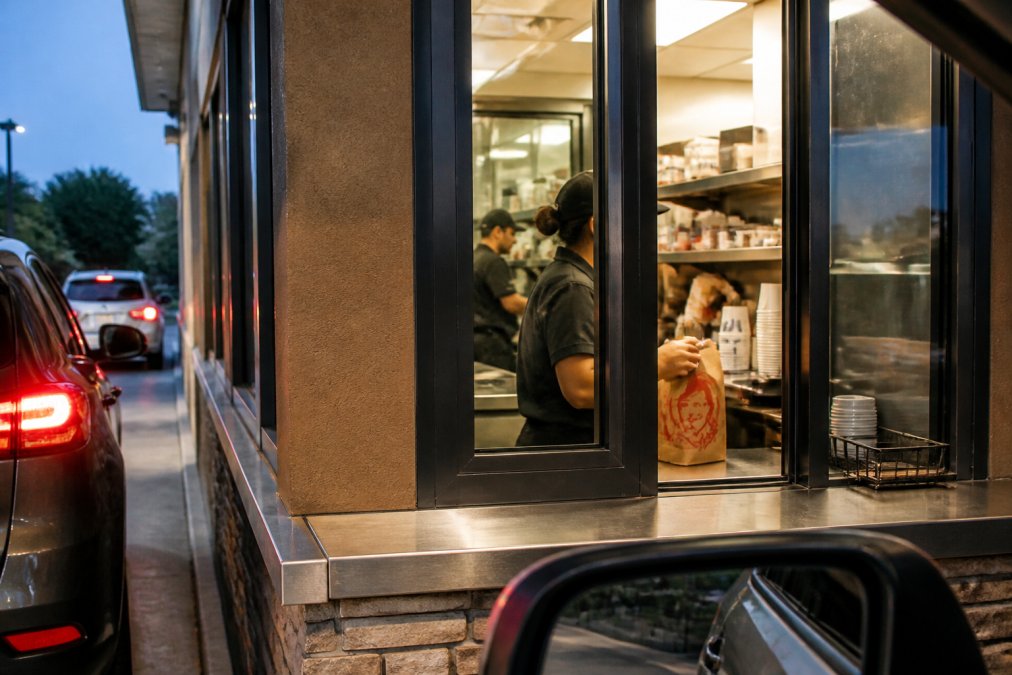
The real test will come in 2026-2027 when enough units have deployed the technology and sufficient time has passed to measure incremental profitability. Until then, expect volatility as sentiment swings between optimism and skepticism based on limited data.
Macroeconomic Factors and Market Sentiment
Macroeconomic conditions shape Wendy’s stock volatility in ways that have nothing to do with restaurant operations. As a consumer discretionary stock, WEN is sensitive to interest rate expectations, inflation data, employment reports, and consumer confidence surveys.
Rising interest rates typically pressure consumer discretionary stocks because they reduce the present value of future cash flows and because higher rates reduce consumer purchasing power. Wendy’s stock often sells off sharply on hawkish Federal Reserve commentary or inflation data surprises, even when the company’s fundamentals haven’t changed.
Inflation creates a dual headwind: it increases input costs for franchisees while reducing consumer purchasing power. The net effect is margin compression and traffic pressure, neither of which is positive for Wendy’s. Investors react sharply to inflation data because it signals the magnitude of this headwind.
Employment data also matters. Weak employment reports suggest lower consumer spending ahead, which triggers selling in discretionary stocks. Strong employment reports can produce rallies, even if they suggest higher inflation and higher interest rates (a traditionally negative combination for equities).
Market sentiment shifts also matter. During periods of broad equity market weakness or risk-off sentiment, consumer discretionary stocks often underperform. Wendy’s stock can decline 10-15% in a week during a market correction, even if nothing has changed in the company’s fundamentals. Conversely, risk-on rallies can produce sharp bounces.
The company’s dividend yield attracts income investors, but it also creates sensitivity to interest rate changes. As rates rise, dividend stocks become less attractive on a relative basis, which can pressure valuations. This is a structural headwind that sustains volatility in the current higher-rate environment.
Key Takeaways
-
Earnings execution is critical. Misses on same-store sales or margin guidance trigger sharp stock moves because they force investors to reprice long-term cash generation. The franchise model creates operating leverage that amplifies earnings surprises.
-
Short interest and retail investor activity add speculative volatility. Understand the difference between a short squeeze (self-limiting) and a fundamental revaluation (sustainable). Retail sentiment can move the stock 10-20% without any change in fundamentals.
-
Sector headwinds matter. Consumer discretionary spending is slowing, and Wendy’s has limited pricing power. This creates structural margin pressure that will persist until macroeconomic conditions improve.
-
AI technology is speculative. Until FreshAI demonstrates clear incremental margin improvement at scale, the stock will experience volatility based on sentiment swings between bull and bear cases. Expect volatility to persist through 2026-2027 as data accumulates.
-
Macro sensitivity is real. Interest rates, inflation, and employment data move the stock more than many investors realize. Wendy’s is a consumer discretionary play, not a defensive holding in a rising-rate environment.
-
Dividend sustainability matters. The dividend attracts income investors, but it also creates sensitivity to rate changes and earnings pressure. Monitor franchisee health and system-wide profitability to assess dividend safety.
-
Volatility creates opportunity. For patient investors, sharp declines driven by sentiment or macro noise can create attractive entry points if the fundamental thesis remains intact. Conversely, sharp rallies on speculative optimism can create selling opportunities.
Frequently Asked Questions
Why does Wendy's stock price swing so much compared to other fast-food chains?
Wendy's stock is volatile because the company faces structural margin pressure from labor costs and commodity prices, while also attracting speculative retail trading interest. Unlike larger competitors with diversified revenue streams, Wendy's earnings are more sensitive to quarterly same-store sales misses and consumer discretionary spending shifts. Additionally, the stock's smaller institutional float and retail trading activity amplify price fluctuations during earnings calls and market corrections.
How does short interest affect Wendy's stock price movements?
WEN short interest analysis reveals that elevated short positions create volatility through two mechanisms: forced covering during rallies (which spike the share price upward) and amplified selling pressure during downturns. When retail investors identify a short squeeze opportunity, trading volume surges and price swings accelerate. However, short interest also reflects legitimate bearish views on the company's fundamentals, so high short levels alone don't predict price direction, they signal that the stock is contested and prone to sharp moves.
What should I expect from Wendy's stock price prediction 2025?
Wendy's stock price in 2025 will likely remain volatile due to ongoing sector headwinds, labor cost pressures, and the uncertain payoff from AI drive-thru investments. Bullish scenarios depend on FreshAI technology delivering measurable sales lifts and margin expansion. Bearish cases focus on consumer discretionary weakness and the risk that AI capex doesn't translate to earnings growth. The stock will remain a 'battleground' for value investors and speculators until the company demonstrates consistent quarterly earnings beats and dividend safety.
How much weight should I give to quarterly earnings when trading or investing in WEN?
WEN earnings report analysis shows that earnings surprises (both positive and negative) are the primary driver of short-term volatility. A miss on same-store sales or earnings per share can trigger 5-10% single-day moves. However, long-term investors should focus on earnings trends over 2-3 quarters and management guidance on margin recovery and capital allocation, rather than reacting to one quarter. Speculative traders often overweight near-term earnings surprises, creating mispricings that value investors can exploit.
This analysis is provided by Buy Wendy’s, an independent research platform focused on The Wendy’s Company. This is commentary, not investment advice. Always conduct your own due diligence and consult a financial advisor before making investment decisions.
This article was written using GrandRanker