Table of Contents
- Executive Summary: The Bull and Bear Cases for WEN Stock
- The Bull Case: Why WEN Stock Attracts Value Investors
- The Bear Case: Structural Headwinds and Valuation Risk
- WEN Stock Dividend History and Payout Sustainability
- Wendy’s Digital Ordering Growth and Revenue Impact
- Fast Food Industry Market Trends and Competitive Positioning
- Bull vs. Bear Comparison Table
- Key Takeaways
Last Updated: August 16, 2026
Executive Summary: The Bull and Bear Cases for WEN Stock
The Wendy’s Company (NASDAQ: WEN) presents a classic tension between value appeal and structural headwinds. The bull case centers on an attractive dividend yield, franchise model resilience, and emerging AI-driven operational improvements through the company’s FreshAI drive-thru technology. The bear case highlights persistent margin compression from labor and commodity costs, same-store sales volatility, and the stock’s historical volatility as a battleground for retail traders and short-squeeze speculation.
This analysis from Buy Wendy’s breaks down both investment theses with a focus on what actually moves the needle for long-term holders and what creates trading opportunities for shorter-term participants. Understanding the real drivers of Wendy’s stock bull vs bear dynamics requires separating narrative from fundamentals, and that’s exactly what this guide does.
The Bull Case: Why WEN Stock Attracts Value Investors
The bullish thesis rests on three core pillars: dividend income, operational efficiency gains from technology, and the structural advantages of the franchise model. For income-focused investors, Wendy’s stock bull vs bear positioning often tilts bullish when dividend sustainability appears intact and the valuation offers margin of safety.
Dividend Yield and Income Stability
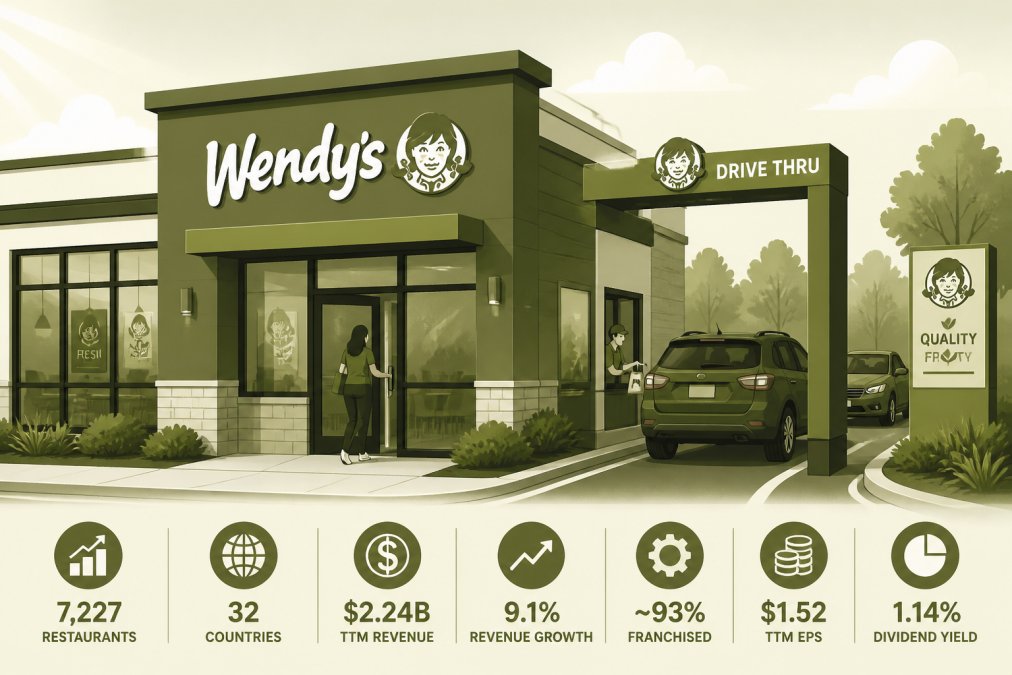
Wendy’s has maintained a consistent dividend payout for years, making it a staple for income-oriented retail investors. The dividend yield often exceeds broader market averages, particularly during periods of stock price weakness. For investors seeking steady cash flow from equity holdings, this income stream provides a floor of tangible return regardless of stock price appreciation.
The sustainability argument rests on free cash flow generation. Wendy’s asset-light franchise model, where franchisees operate and maintain restaurants while corporate collects royalties and rent, produces reliable cash generation without the capital intensity of company-owned operations. This structure theoretically allows the company to maintain or grow distributions even during challenging consumer environments.
However, dividend sustainability depends entirely on the company’s ability to generate sufficient operating cash flow. Margin compression, store closures, or franchise attrition would threaten payout ratios. The bull case assumes these headwinds remain manageable and that the company’s capital allocation prioritizes dividend protection. Investors tracking dividend trends and corporate financial health can reference Wendy’s Stock & Investor Insights for detailed analysis of payout sustainability and cash flow trends.
AI Drive-Thru Technology and Operational Efficiency
Wendy’s FreshAI initiative represents the company’s bet on technology-driven labor cost reduction. AI-powered order-taking systems in drive-thru lanes aim to reduce labor requirements, improve order accuracy, and accelerate throughput. If successful at scale, this technology could meaningfully improve unit economics and offset wage inflation pressures.
The bull thesis here is straightforward: automation addresses the single largest cost pressure facing quick-service restaurants, labor. As minimum wages rise and labor availability tightens in many markets, companies that deploy effective automation gain competitive advantage. Wendy’s early moves in this direction position the company ahead of some competitors in technology adoption.
The real test comes in execution. Technology deployment across thousands of franchise locations involves integration challenges, franchisee investment requirements, and customer adoption friction. The bull case assumes these obstacles are surmountable and that AI implementation delivers measurable labor savings within 24-36 months.
Franchise Model Resilience
Wendy’s operates primarily through franchised locations, a model that transfers operational risk and capital requirements to franchisees while maintaining revenue through royalties and rent. This structure provides defensive characteristics during downturns. Franchisees bear the direct impact of consumer traffic declines and rising labor costs, while corporate collects relatively stable royalty streams.
For investors, the franchise model means Wendy’s balance sheet is less exposed to same-store sales volatility than fully company-operated competitors. A 5% decline in comparable store sales hits franchisee profitability harder than it hits Wendy’s corporate cash flow. This asymmetry appeals to value investors seeking downside protection.
The counterargument is that franchise model stability depends on franchisee health. If unit economics deteriorate sufficiently, franchisees may close stores or resist expansion, limiting growth and potentially triggering rent renegotiations. The bull case assumes franchisees maintain adequate margins to stay invested in the system.
The Bear Case: Structural Headwinds and Valuation Risk
The bearish thesis emphasizes persistent cost inflation, consumer traffic challenges, and valuation risk if growth falters. For traders and short-oriented participants, Wendy’s stock bull vs bear dynamics often tilt bearish when comparable store sales decelerate or when margin compression accelerates beyond market expectations.
Margin Compression from Labor and Food Costs
The quick-service restaurant industry faces structural margin pressure from wage inflation and commodity cost volatility. Labor represents 25-30% of operating costs for most QSR operators, and wage pressures show no signs of abating. Food costs, particularly beef, remain volatile and subject to supply chain disruptions.
Wendy’s has limited pricing power. The brand positions itself as a value alternative within the QSR spectrum. Aggressive menu price increases risk traffic declines that offset the margin benefit. The company faces a classic squeeze: cost inflation outpaces pricing flexibility, compressing unit-level profitability.
The bear case argues this margin compression is structural, not cyclical. Automation may help, but labor cost inflation typically outpaces productivity gains from technology. Franchisees facing margin pressure may reduce reinvestment, slow expansion, or eventually exit the system. This dynamic creates a negative feedback loop where declining unit economics lead to store closures, which reduce corporate royalty revenue.
Same-Store Sales Performance and Consumer Traffic Trends
Wendy’s comparable store sales have shown volatility, reflecting both consumer traffic challenges and menu mix effects. Traffic trends matter enormously for QSR valuations, if customers are visiting less frequently, no amount of operational efficiency can offset that decline.
The bear thesis emphasizes that discretionary consumer spending is under pressure. Higher interest rates, student loan repayment resumption, and wage growth failing to keep pace with inflation all constrain the lower-income consumer segment that drives QSR traffic. Wendy’s positioning as a value brand means the company is exposed to exactly this demographic.
Additionally, the competitive environment has intensified. Aggressive pricing from competitors, delivery platform expansion, and at-home prepared food options all fragment the QSR market. Wendy’s must maintain traffic through marketing spend and menu innovation, both of which consume margin. The bear case argues this competitive intensity is structural and worsening.
Meme Stock Volatility and Short Interest Dynamics
Wendy’s has attracted retail trader attention, creating periods of elevated volatility and short squeeze speculation. While short interest has fluctuated, the stock retains characteristics that appeal to retail traders seeking momentum and squeeze opportunities. This creates a secondary risk: valuation divorced from fundamentals.
When retail enthusiasm drives the stock higher, fundamental investors may view the move as a sell opportunity. This creates a ceiling on valuations and contributes to volatility. For long-term holders, this volatility is noise. For traders, it’s opportunity. The bear case argues that fundamental deterioration will eventually reassert itself, and speculative positions will unwind sharply.
The short interest dynamic also matters. If short interest is elevated and fundamentals deteriorate, shorts may cover into weakness (supporting the stock), or they may hold through a decline (amplifying downside). This unpredictability makes the stock less suitable for traditional value analysis.
WEN Stock Dividend History and Payout Sustainability
Wendy’s dividend history shows consistent payouts over multiple years, with occasional increases reflecting cash generation improvements. The dividend yield typically ranges from 4% to 6% depending on stock price, making it attractive relative to Treasury yields and broader equity yields.
Payout sustainability depends on free cash flow sufficiency. The company must generate enough operating cash flow to cover the dividend, fund capital expenditures (primarily remodels and technology deployment), and service debt. If operating cash flow deteriorates significantly, the dividend becomes vulnerable.
The bull case assumes current payout ratios are sustainable because the franchise model generates stable cash flows. The bear case argues that margin compression will eventually reduce cash generation, forcing either dividend cuts or debt increases to maintain payouts, both negative for equity holders.
Wendy’s Digital Ordering Growth and Revenue Impact
Digital ordering represents a meaningful revenue stream and customer engagement tool for Wendy’s. Mobile app orders, kiosk transactions, and third-party delivery platform sales all contribute to total revenue and provide data on customer preferences and behavior.
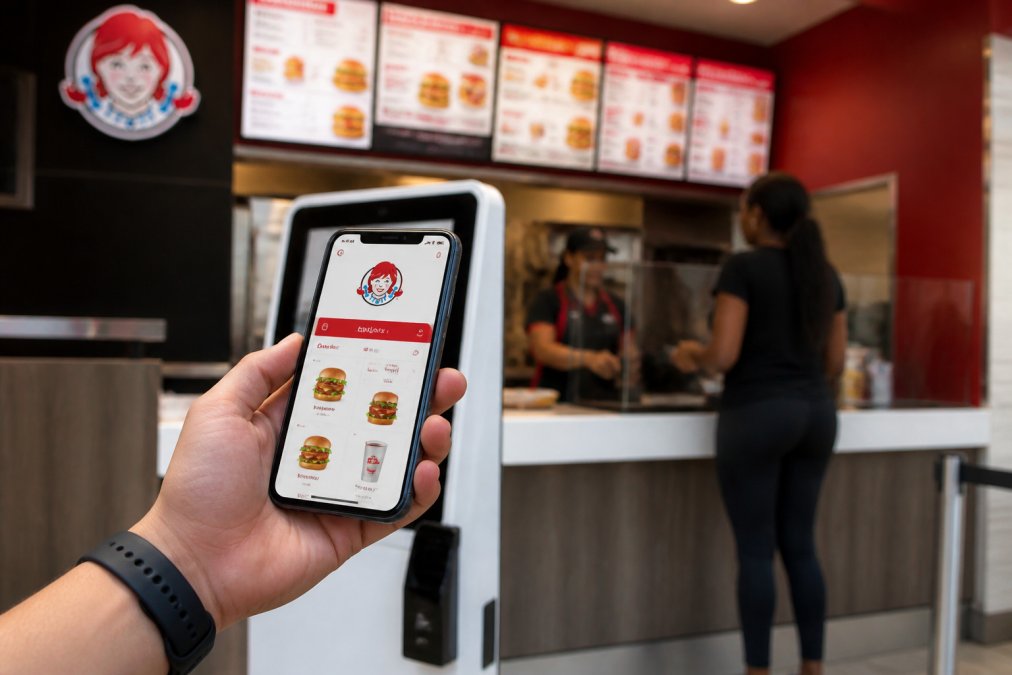
Digital channels typically carry higher margins than drive-thru or in-restaurant transactions because they reduce labor requirements and improve order accuracy. Growing digital penetration should support margin expansion if executed well. However, third-party delivery platforms take significant commissions (15-30% of order value), which can offset margin benefits.
The bull case assumes digital ordering penetration continues rising, shifting the revenue mix toward higher-margin channels and enabling better customer data collection for personalization. The bear case notes that third-party platform dependence creates margin leakage and customer relationship disintermediation, Wendy’s doesn’t own the customer relationship when the order flows through DoorDash or Uber Eats.
Digital ordering growth also provides operational data for AI systems. More orders flowing through digital channels means more data to train recommendation engines and optimize staffing. This creates a positive feedback loop where digital adoption improves AI effectiveness, which improves customer experience, which drives more digital adoption. Investors interested in tracking Wendy’s digital performance and menu evolution can reference Wendy’s Menu Tracker for detailed insights into product mix and pricing trends.
Fast Food Industry Market Trends and Competitive Positioning
The QSR industry faces several secular headwinds: labor cost inflation, commodity volatility, consumer traffic pressure, and competitive intensity. Within this environment, Wendy’s occupies a specific competitive position: premium value.
The company positions itself above McDonald’s on quality perception but below premium burger chains on price. This positioning is defensible but requires consistent execution. Menu innovation, brand marketing, and operational excellence all matter. Any slip in execution risks losing market share to either lower-priced competitors or higher-quality alternatives.
Industry trends also include consolidation pressure. Larger chains with scale advantages in technology deployment, supply chain efficiency, and marketing spend may outcompete smaller or less-capitalized operators. Wendy’s has sufficient scale to compete, but the company must execute on technology deployment and maintain franchisee health to sustain competitive position.
The digital transformation of QSR is accelerating. Customers increasingly expect seamless omnichannel experiences, mobile ordering, in-app payment, loyalty integration, and delivery options. Companies that execute this transition effectively gain competitive advantage. Wendy’s progress here will significantly influence long-term competitive positioning.
Bull vs. Bear Comparison Table
| Factor | Bull Case | Bear Case |
|---|---|---|
| Dividend Yield | Attractive 4-6% yield; sustainable via franchise model cash generation | Vulnerable if margins compress; payout ratio may become unsustainable |
| AI Technology | FreshAI reduces labor costs; competitive advantage in automation | Execution risk; franchisee investment requirements; productivity gains may lag wage inflation |
| Franchise Model | Defensive structure; transfers operational risk; stable royalty streams | Franchisee health deteriorates with margin pressure; model limits growth |
| Same-Store Sales | Stabilization expected as consumer spending recovers | Structural traffic decline from competitive intensity and consumer pressure |
| Margin Pressure | Temporary; automation and pricing offset cost inflation | Structural; labor and commodity inflation outpace pricing power |
| Valuation | Attractive relative to growth; margin of safety for income investors | Vulnerable if growth falters; multiple compression risk |
| Stock Volatility | Opportunity for entry at dislocations; retail enthusiasm supports upside | Meme stock dynamics create valuation risk; short squeeze unpredictability |
Key Takeaways
The bull case for Wendy’s stock rests on dividend sustainability, technology-driven operational improvement, and franchise model defensiveness. For income-focused investors, the current yield offers attractive compensation for equity risk if the company maintains cash generation. AI drive-thru technology represents a genuine competitive advantage if execution succeeds at scale.
The bear case emphasizes structural margin compression, consumer traffic challenges, and valuation risk if growth falters. Labor cost inflation and competitive intensity create persistent headwinds that technology may not fully offset. Franchise model stability depends on franchisee profitability, which is under pressure.
The investment decision ultimately depends on your time horizon and risk tolerance. Long-term income investors may find value in the current dividend yield and franchise model stability. Traders should remain aware of volatility dynamics and short interest levels. Contrarian investors should watch for inflection points where margin trends reverse or traffic stabilizes.
For deeper analysis of Wendy’s financial metrics, franchise economics, and technology impact, Wendy’s Stock & Investor Insights provides institutional-grade research specifically designed for individual investors forming independent views on Wendy’s stock bull vs bear positioning.
Frequently Asked Questions
Is Wendy's stock considered a good long-term investment?
Whether WEN is suitable for long-term investors depends on your risk tolerance and investment thesis. The bull case rests on dividend yield, franchise model stability, and AI-driven operational improvements. The bear case highlights margin compression from labor and food costs, same-store sales volatility, and execution risk on technology rollout. Value investors may see an opportunity; growth-focused investors may find better returns elsewhere. Independent analysis of your own financial situation and goals is essential before deciding.
What are the primary risks associated with investing in The Wendy's Company?
Key risks include inflationary pressure on food and labor costs, which compress operating margins; consumer traffic volatility tied to economic cycles; execution risk on FreshAI and digital ordering investments; franchise model dependency on franchisee profitability and compliance; and short interest that can amplify stock price volatility. Balance sheet leverage and dividend sustainability during downturns also warrant scrutiny. Investors should review quarterly earnings reports and SEC filings to track these metrics.
How does Wendy's dividend yield compare to other fast-food chains?
Wendy's dividend yield has historically positioned it as an income-focused play within the quick-service restaurant sector. Comparing WEN's payout ratio and yield to industry peers requires analyzing current earnings, free cash flow, and capital allocation priorities. Fast food industry market trends show a shift toward technology investment and labor cost management, which influences dividend sustainability across the sector. Check the Wendy's Stock & Investor Insights section on Buy Wendy's for current dividend data and peer benchmarking.
What impact does Wendy's digital ordering growth have on profitability?
Digital ordering growth typically improves operational efficiency, reduces labor bottlenecks, and increases order accuracy and speed. Higher digital penetration can support same-store sales growth and margin expansion if execution is flawless. However, the upfront investment in technology infrastructure, app development, and franchisee support creates near-term headwinds. Long-term profitability depends on whether digital channel growth outpaces the cost of implementation and whether it attracts incremental customers rather than just shifting existing sales online.
This article was written using GrandRanker