Table of Contents
- Executive Summary: The Wendy’s AI Drive-Thru Story
- How Wendy’s FreshAI Works in the Drive-Thru
- AI Drive-Thru Accuracy Rates and Real-World Performance
- Impact of AI on Restaurant Labor and Operating Costs
- Fast Food Automation Trends and Competitive Positioning
- Customer Experience and Sentiment Analysis
- Financial and Stock Implications for WEN Investors
- Key Takeaways
Last Updated: August 8, 2026
Executive Summary: The Wendy’s AI Drive-Thru Story
Wendy’s AI drive-thru impact represents one of the most significant operational pivots in quick-service restaurant history. The company’s FreshAI technology, a generative artificial intelligence system deployed across its drive-thru network, is redefining how orders are taken, processed, and fulfilled. For investors evaluating The Wendy’s Company (NASDAQ: WEN), understanding this technological shift is essential to assessing both near-term operational efficiency and long-term competitive positioning.
The core proposition is straightforward: AI-powered voice-enabled ordering reduces labor friction, accelerates service time, and improves order accuracy. Deployment challenges, customer adoption curves, competitive responses, and downstream effects on franchise economics all matter. This analysis breaks down what’s actually happening in Wendy’s drive-thrus, separates fact from hype, and explores what the data tells us about stock implications.
How Wendy’s FreshAI Works in the Drive-Thru
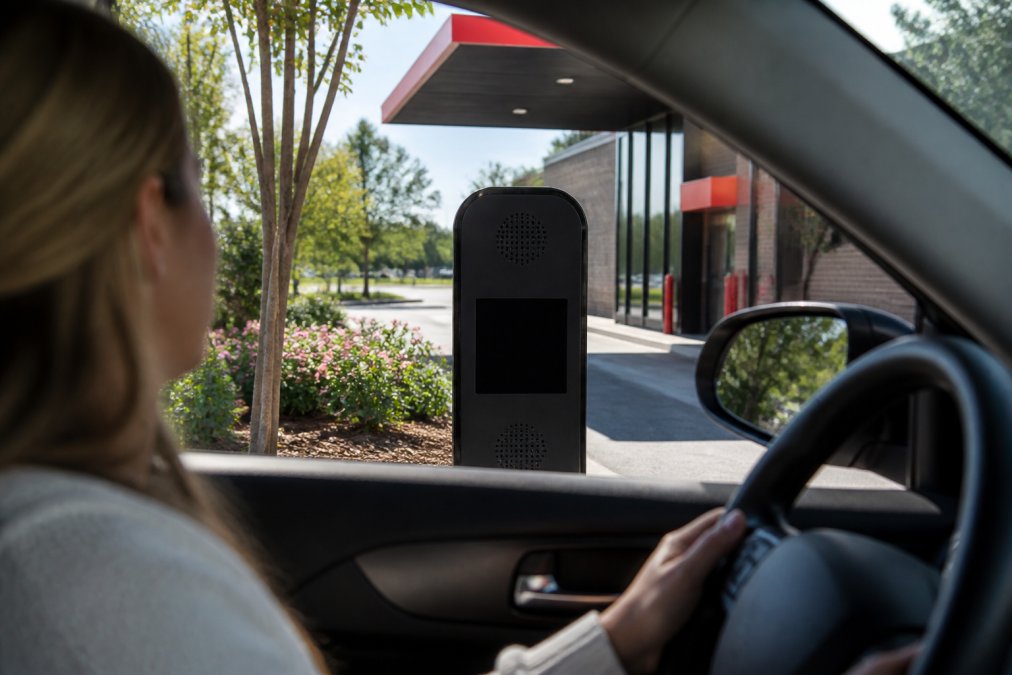
Wendy’s FreshAI operates as a conversational interface powered by natural language processing. When a customer pulls up to the speaker, they’re speaking to an AI system trained to understand speech patterns, menu items, customization requests, and payment information. The system processes orders in real time, flags ambiguities for human escalation, and transmits orders directly to the kitchen display system.
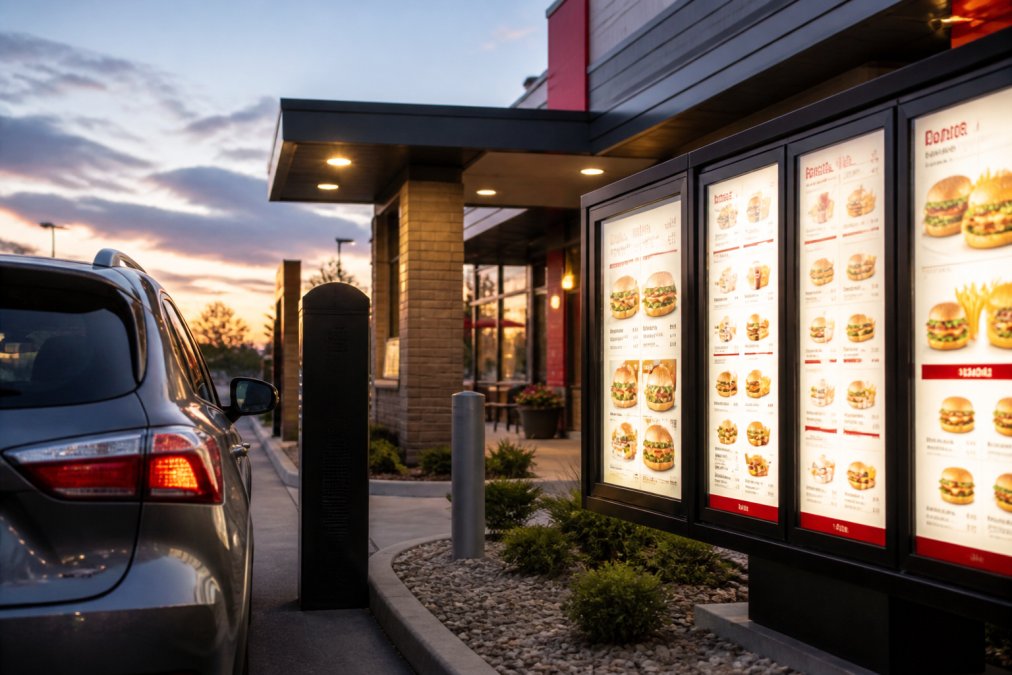
The technical architecture relies on cloud-based infrastructure. Audio streams are processed through remote servers where the AI model runs inference. Response times typically fall between 1-2 seconds, competitive with human order-takers but noticeably faster than average drive-thru interactions.
Key operational features include:
- Speech recognition accuracy for common menu items and natural speech patterns
- Contextual understanding of modifications, size upgrades, and bundled orders
- Payment processing integration with point-of-sale systems
- Escalation protocols that route complex orders to human staff
- Real-time menu synchronization to reflect daily promotions and availability
The system augments rather than replaces human workers. Staff still confirm orders, handle payment disputes, and manage edge cases. The AI handles the high-volume, repetitive task of order-taking, which historically consumed 40-50% of a drive-thru associate’s time.
Deployment began in 2024 and accelerated through 2025. By mid-2026, the technology was operational in several hundred company-operated and franchise locations, prioritizing high-volume restaurants where labor costs justified the investment. For those tracking operational changes across the system, Wendy’s News & Restaurant Tracker provides real-time updates on FreshAI rollout progress and location-specific deployment milestones.
AI Drive-Thru Accuracy Rates and Real-World Performance
Accuracy is the critical metric for AI drive-thru success. A misheard order creates friction downstream, kitchen waste, customer dissatisfaction, and rework labor that negates efficiency gains.
Published accuracy data from Wendy’s has been limited. Third-party evaluations are sparse. Operational observations suggest the system achieves order accuracy rates in the 85-92% range for straightforward orders. Complex orders, heavy customization, unclear speech, and regional accents see lower accuracy. Background noise in busy drive-thrus introduces variability.
This performance level is competitive with human order-takers, who operate under pressure and produce errors at similar rates. The AI gains ground through consistency: performance remains uniform regardless of time of day or order volume, whereas human performance degrades during peak hours under stress and fatigue.
The real-world challenge is handling the tail cases where the AI misunderstands or lacks context. Early reports suggest escalation occurs in roughly 10-12% of orders, which is manageable but not negligible. These escalations to human staff add back labor and latency.
Data privacy and security matter here. The system processes audio containing payment information. Wendy’s has implemented encryption protocols for data transmission and storage, but security vulnerabilities in cloud infrastructure remain a concern that regulators and privacy advocates are monitoring.
Impact of AI on Restaurant Labor and Operating Costs
The labor economics are where the investment thesis lives. A typical Wendy’s drive-thru operates with 2-3 dedicated order-takers during peak hours. If AI handles 85-90% of orders, the company can reduce headcount by one position per shift or redeploy that labor to food preparation and order fulfillment.
A drive-thru associate earning competitive wages costs material annual expense per location. Reducing one full-time equivalent position saves meaningful labor expense. At a company operating 7,000+ locations, even modest labor reductions compound into significant operating savings.
However, implementation costs are substantial. Cloud infrastructure, AI model training, point-of-sale integration, and staff retraining require upfront capital. The payback period depends on labor savings and adoption rates. If one position is eliminated per location and the system operates reliably, payback could occur within 3-5 years. Franchise operators, who own 85% of Wendy’s locations, bear much of this cost, not the corporate entity. This creates friction in the rollout.
Workforce reallocation is the overlooked variable. The AI redeploys rather than eliminates labor. Order-takers shift to food preparation, packaging, and order fulfillment roles. Some employees may face reduced hours or scheduling changes. Labor relations and retention become operational risks.
The accessibility angle matters too. For customers with speech impediments, strong accents, or hearing difficulty, AI-powered ordering can be frustrating. Wendy’s has maintained human ordering options, but workflow defaults can inadvertently push customers toward the AI system. Balancing automation with accessibility is an operational and reputational consideration.
Fast Food Automation Trends and Competitive Positioning
Wendy’s is not alone in pursuing voice-enabled ordering automation. McDonald’s, Burger King, and Taco Bell are all testing or deploying similar systems. The competitive landscape is intensifying.
Wendy’s advantage lies in timing and execution. The company moved early and built proprietary integration with its franchisee network. FreshAI is purpose-built for Wendy’s menu and operational workflows, not a generic third-party system. This customization creates switching costs and competitive moat, but only if execution remains superior.
The competitive risk is that technology commoditizes. If voice-enabled ordering becomes table-stakes, first-mover advantage erodes. Wendy’s must maintain innovation velocity, improving accuracy, reducing latency, and expanding language support to stay ahead.
Market adoption also depends on customer acceptance. Early data suggests younger, tech-comfortable customers embrace AI ordering. Older demographics and rural markets show more resistance. If adoption plateaus, the capital investment becomes a sunk cost with limited returns.
Customer Experience and Sentiment Analysis
How are customers actually responding to AI drive-thru ordering? Sentiment data is mixed.
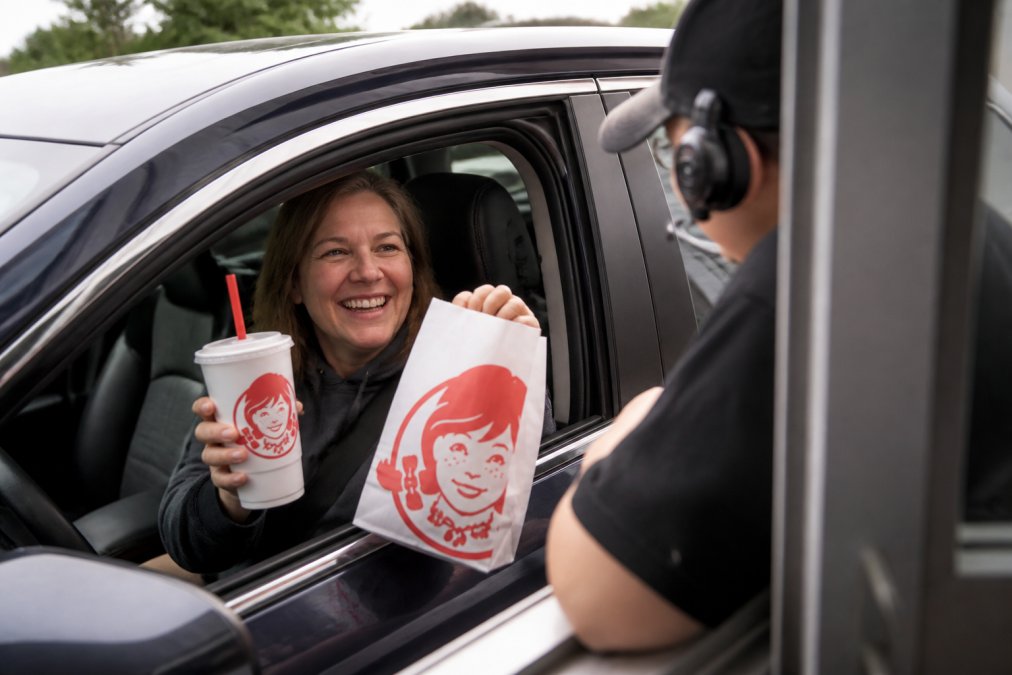
Early adopters in test markets report mixed reactions. Some appreciate the speed and consistency; orders are taken faster with fewer errors. Others find the experience impersonal or frustrating when the AI misunderstands requests. Social media commentary reflects this bifurcation: enthusiasm from convenience-focused users, skepticism from those who value human interaction.
Novelty wears off quickly. The first few uses feel novel; by the tenth use, it becomes routine. The question is whether the underlying experience, speed, accuracy, personalization, justifies the shift from human interaction.
Personalization is an underexplored opportunity. The AI system has access to order history, loyalty program data, and customer preferences. It could proactively suggest items or offer targeted promotions. This capability hasn’t been fully activated yet but represents a competitive advantage if implemented well.
Data collection is another dimension. Every interaction generates data on speech patterns, order preferences, visit frequency, and time of day. This data is valuable for menu optimization, demand forecasting, and targeted marketing. Customers must trust that their data is handled responsibly, which requires transparency and security.
Accessibility concerns linger. Customers with hearing loss, speech disabilities, or language barriers may find AI ordering less accessible than human interaction. Wendy’s has committed to maintaining human ordering options, but operational pressure could erode this commitment over time.
Financial and Stock Implications for WEN Investors
For equity investors, the AI drive-thru thesis hinges on three variables: labor cost reduction, same-store sales growth, and capital efficiency.
Labor cost reduction is the most direct benefit. If AI eliminates one position per location and improves throughput during peak hours, company-operated stores see margin expansion. For franchisees, the equation is less favorable; they bear capital cost but share labor savings with the company through royalties and fees. This creates tension in franchise relationships.
Same-store sales growth is less certain. Faster service and fewer errors could drive traffic, but automation alone doesn’t increase customer spending. Menu innovation, pricing strategy, and marketing matter more. If AI ordering doesn’t drive incremental sales, the investment becomes purely a cost-reduction play with lower return potential.
Capital efficiency requires disciplined deployment. Wendy’s should prioritize high-volume locations where labor cost savings are largest and payback is fastest. Deploying to low-volume or franchise-resistant locations wastes capital.
From a stock valuation perspective, the AI narrative could support multiple expansion if execution is flawless. Investors reward companies with structural cost advantages and technological moats. But execution risk is real. If adoption is slower than expected, accuracy issues persist, or competitive responses neutralize the advantage, the stock could face multiple compression.
For dividend investors, the question is whether AI-driven margin expansion supports the current payout. Sustainability depends on earnings growth. If AI improves earnings without requiring excessive capital reinvestment, the dividend is safer. Investors tracking Wendy’s financial performance and strategic initiatives can reference Wendy’s Stock & Investor Insights for detailed earnings analysis and capital allocation guidance.
The short-term catalyst is earnings delivery. Investors should watch quarterly reports for same-store sales trends, labor cost metrics, and capital expenditure guidance. Positive surprises on labor productivity or same-store sales would validate the thesis. Misses or guidance reductions would raise questions about execution.
Key Takeaways
-
FreshAI is operationally real but not revolutionary. The AI system is deployed at scale, handles 85-90% of orders accurately, and delivers modest labor savings. It’s a meaningful efficiency tool, not a game-changer.
-
Labor economics are the primary driver. Reducing one order-taker position per location saves material labor expense. Implementation costs are high, payback periods are 3-5 years, and franchise relationships create friction.
-
Competitive positioning is time-sensitive. Wendy’s has first-mover advantage, but technology commoditizes. The company must maintain innovation velocity and customer adoption momentum to sustain differentiation.
-
Customer sentiment is bifurcated. Early adopters like the speed and consistency. Skeptics prefer human interaction. Long-term adoption depends on whether the experience delivers tangible value beyond novelty.
-
Stock implications are conditional. If AI drives labor cost reduction and supports same-store sales growth, the thesis supports equity upside. If execution falters, the investment becomes a sunk cost with limited returns. Earnings reports and capital guidance will clarify the direction.
-
Dividend sustainability depends on earnings growth. AI-driven margin expansion should support the dividend, but execution risk remains.
Frequently Asked Questions
How does Wendy's FreshAI technology handle complex or customized orders?
FreshAI uses natural language processing to interpret conversational speech patterns and custom requests. The system learns regional dialects and menu variations, improving accuracy over time. When uncertain, it can clarify orders in real time or route complex requests to a human operator, ensuring customer satisfaction while maintaining efficiency gains.
What happens when the AI drive-thru system fails or experiences technical issues?
Wendy's locations maintain manual backup protocols. When FreshAI experiences latency or accuracy issues, staff can immediately switch to traditional headset-based ordering. This redundancy ensures service continuity and prevents customer frustration, though it reduces the efficiency advantage during downtime.
Are Wendy's employees being laid off due to the AI drive-thru rollout?
Wendy's has stated that AI is designed to augment, not replace, staff. The technology handles order-taking, allowing employees to focus on food preparation, quality control, and customer service. Labor reallocation rather than reduction is the stated strategy, though individual franchise operators may adjust staffing based on local demand and implementation timing.
How does Wendy's AI drive-thru compare to competitors' automation efforts?
Wendy's FreshAI represents one of the largest-scale deployments of generative AI in quick-service restaurants. Competitors are testing similar voice-enabled ordering systems, but Wendy's cloud-based infrastructure and real-time data analytics provide operational advantages. The company's focus on conversational interfaces and menu customization differentiates its approach in the fast food automation landscape.
This article was written using GrandRanker