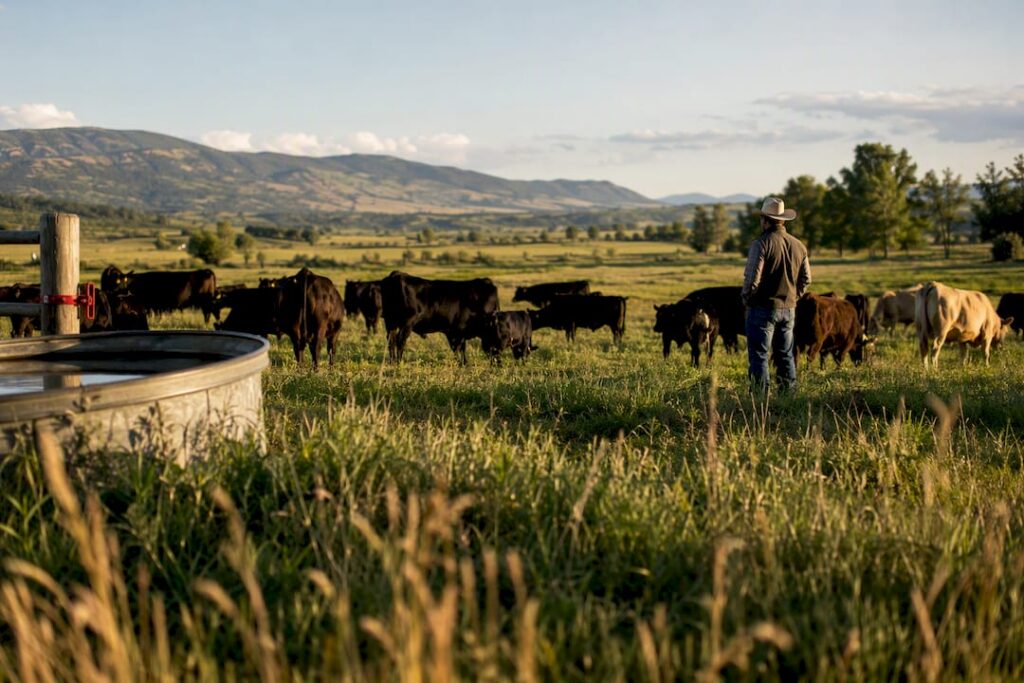
Wendy’s primary defense against beef cost volatility is not a commodity futures desk. It runs through the Quality Supply Chain Cooperative, upstream producer partnerships, and franchise-level pricing discipline rather than public hedging instruments. These measures reduce the odds of a severe supply shock and narrow the volatility band on input costs, but they do not eliminate margin exposure. Investors should treat this as risk moderation, not risk removal, and keep modeling downside scenarios for large commodity swings.
TL;DR:
- Wendy’s manages beef cost risk primarily through supply chain partnerships, upstream producer investments, and franchise-level pricing discipline rather than financial hedging instruments.
- Contracts negotiated via the Quality Supply Chain Cooperative provide some price stability but do not fully protect against multi-year cattle cycle contractions or large price swings.
- Upstream programs like Fresh Resilience aim to improve supply stability by enhancing herd resilience and feed efficiency, but adoption takes multiple years to impact volatility.
- Franchise economics shield the company’s margins from beef price spikes, as most revenue comes from royalties and rents rather than direct food costs, though sustained increases can eventually pressure franchisee profitability.
- Investors should model beef cost sensitivity with probability-based scenarios, accounting for supply chain mitigation, and stress-test for shocks of 10-30% to understand potential margin impacts.
Table of Contents
- Mechanisms Wendy’s Uses to Manage Beef Cost Risk
- What Role Does the QSCC Play in Procurement?
- How Do Upstream Partnerships Reduce Supply Volatility?
- How Do Franchise Economics Affect Beef Cost Exposure?
- How Should Investors Model Beef-Cost Sensitivity?
- Where Does This Mitigation Strategy Fall Short?
- BuyWendy’s Margin Math: A Worked Example
- What Are Wendy’s Sourcing Timelines and 2030 Goals?
- What Financial Hedging Tools Exist for Beef Price Risk?
- What Market Factors Should Investors Track for Beef Prices?
- What Can Case Studies Teach About Beef Cost Mitigation?
- Should Investors Weigh Long-Term or Short-Term Hedging Approaches?
- How Do Disease Outbreaks and Climate Risks Affect Beef Hedging?
- Author Perspective: What Should Investors Do Next?
- How BuyWendy’s Can Help You Model Beef-Cost Risk
- Sources
- FAQ
Mechanisms Wendy’s Uses to Manage Beef Cost Risk
Wendy’s approach to hedging beef costs rests on five interlocking mechanisms, none of which resembles a traditional financial hedge. There’s no evidence in Wendy’s public filings of a beef futures or options program run at the corporate level. Instead, the company leans on structural and operational tools that shape its exposure over months and years rather than days.
The categories break down as follows:
- Centralized procurement through the Quality Supply Chain Cooperative, which negotiates system-wide contracts across U.S. and Canadian operations.
- Upstream investments and producer partnerships with organizations like AgriWebb and AgSpire, aimed at improving supply-side stability.
- Responsible-sourcing verification through the Animal Care Standards Program and alignment with the U.S. Roundtable for Sustainable Beef.
- Operational levers, including menu pricing, promotional cadence, and the economics baked into the franchise model.
- Logistics and quality-control practices that smooth short-term disruptions in supply.
Each layer addresses a different part of the risk chain, from farm-level variance to point-of-sale pricing power.
What Role Does the QSCC Play in Procurement?
The Quality Supply Chain Cooperative functions as Wendy’s collective bargaining arm, pooling purchase volume across the franchise system to negotiate terms no single operator could secure alone. Because QSCC buys at system scale, it can lock in contract structures that individual franchisees would never access on their own.
Contracts negotiated through this channel typically include several recurring features:
- Volume-band commitments that guarantee suppliers a baseline of purchase activity.
- Price mechanics that soften (though rarely eliminate) exposure to short-term spot-market spikes.
- Quality and specification clauses tied to Wendy’s insistence on fresh, never-frozen North American beef.
- Limited pass-through provisions that cap how much of a supplier’s cost increase flows directly to Wendy’s in a given period.
The tradeoff is real: price certainty comes at the cost of flexibility. When cattle supply tightens across a multi-year cycle, a contract structured for moderate swings can still leave Wendy’s exposed if the move is large enough or lasts long enough. Analysts have flagged the QSCC as a structural advantage that helps negotiate favorable pricing, but they’re also clear that it doesn’t fully insulate margins from major commodity swings.
Pro Tip: When you’re reading a QSR’s commodity commentary in a quarterly filing, look for language around “contracted” versus “spot-exposed” volume. That ratio tells you more about near-term margin risk than the headline beef price does.
How Do Upstream Partnerships Reduce Supply Volatility?
Wendy’s has moved beyond a simple buyer-seller relationship with its beef suppliers, investing directly in the ranchers and backgrounders further up the chain. The company launched the Fresh Resilience Beef Cattle Programme with AgSpire and joined the Legacy Landscapes Programme, both aimed at improving feed efficiency and land-use resilience at the producer level, according to Supply Chain Digital.
These programs work through a combination of technical assistance, feed-efficiency guidance, and financial incentives designed to get producers to adopt practices that reduce variance in output. Sustainability Magazine reports that the AgriWebb, AgSpire, and Legacy Landscapes collaborations combine technical expertise and shared sustainability goals to reduce risk and environmental impact across beef-producing states.
The mechanics that matter for investors:
- Better feed conversion and animal health at the ranch level lowers the variance in supply that would otherwise ripple into procurement costs.
- Technical support paired with financial incentives is what drives adoption, since ranchers won’t change practices on cost alone.
- Alignment with the U.S. Roundtable for Sustainable Beef and the Animal Care Standards Program adds a layer of supplier accountability and visibility that procurement teams use to flag risk earlier.
Wendy’s 2024 Corporate Responsibility Report notes the company evaluated its direct protein suppliers and compiled a snapshot covering more than 20,000 farms and facilities, a scale that underscores why this kind of mitigation moves slowly. Analysts frame this upstream involvement as a strategic evolution rather than a quick fix, one that builds feed efficiency and long-term availability over multiple growing seasons instead of locking in a price today.
How Do Franchise Economics Affect Beef Cost Exposure?
Wendy’s asset-light franchise structure changes how beef-cost swings hit the corporate income statement. Royalties and rents, not restaurant-level food margins, generate the bulk of corporate revenue, which means a spike in ground beef prices lands first and hardest on franchisees rather than on Wendy’s own reported margins. That’s a real insulating effect, but it’s not unlimited. If franchisee profitability erodes for long enough, it eventually pressures unit growth, remodel pace, and royalty compliance.
On the pricing side, Wendy’s operates in a category where competitors adjust menu prices in near real time, which caps how aggressively any single chain can pass along cost increases without losing traffic. High-frequency value items, the ones built to drive visits, tend to carry the thinnest margins and the highest sensitivity when beef costs rise. That combination forces a constant balancing act between:
- Protecting promotional traffic drivers that depend on thin, beef-heavy margins.
- Adjusting core menu pricing where competitive response is slower.
- Leaning on inventory specifications and logistics practices to smooth short-term supply disruptions before they hit the register.
The asset-light franchise model is worth understanding in more detail if you’re trying to separate corporate exposure from franchisee exposure in your own modeling.
How Should Investors Model Beef-Cost Sensitivity?
Translating Wendy’s mitigation efforts into a usable model starts with a straightforward sensitivity framework, then layers in the effect of QSCC and upstream programs on the tails of that distribution.
- Set a baseline. Start with current cost of goods sold as a percentage of system-wide sales, and isolate the beef component using whatever commodity commentary Wendy’s provides in its quarterly filings.
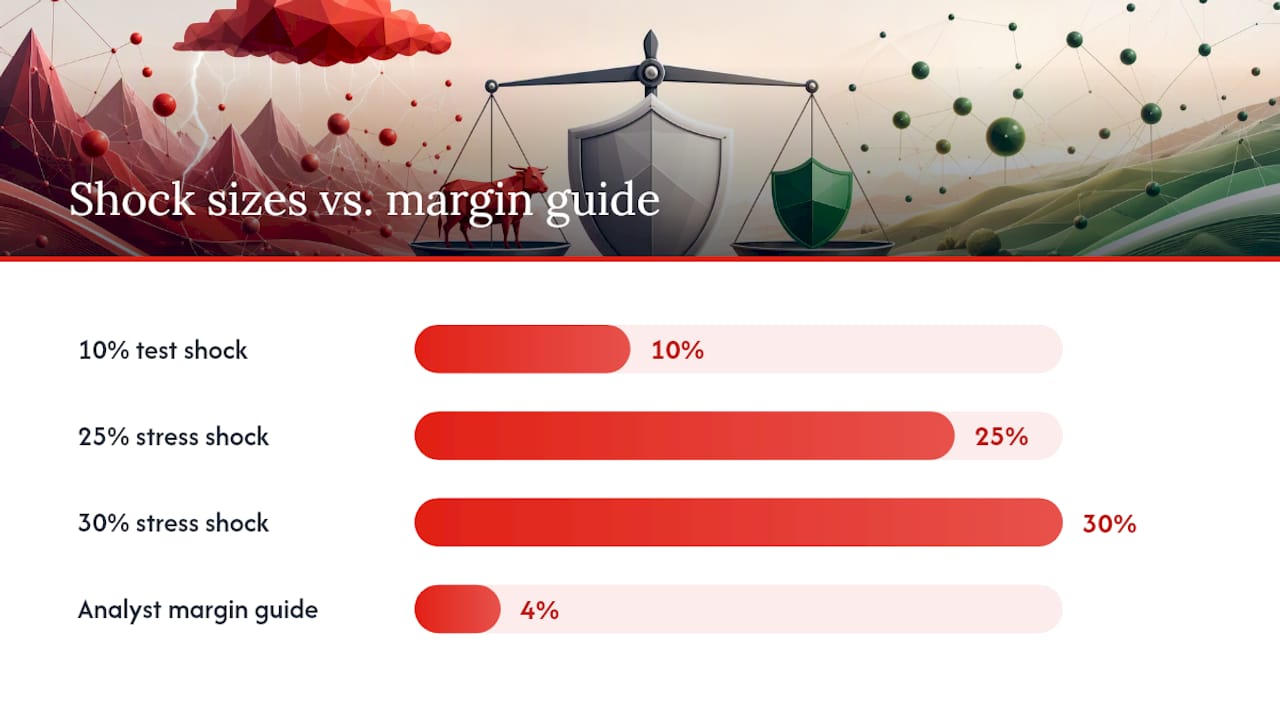
- Apply a shock. Run a 10% increase in beef input costs through the model and observe the effect on contribution margin and system EBITDA, holding pricing and volume constant.
- Adjust for mitigation. Where QSCC contracts and upstream programs are active, narrow the probability of an extreme spike rather than assuming the shock disappears. The realistic effect is a tighter volatility band, not a flat line.
- Cross-check against pass-through. Layer in a partial price-increase assumption, since Wendy’s competitive position limits how much cost it can push to consumers without hurting traffic.
- Stress-test the tail. Run a second scenario at a larger shock, say 25% to 30%, to see whether mitigation efforts still hold up or whether margin compression accelerates.
The KPIs worth tracking each quarter include COGS as a percentage of sales, management’s specific commodity commentary, disclosed spend on supply-chain programs, and any adoption metrics tied to upstream initiatives. BuyWendy’s margin analysis walks through why the 4% margin guide many analysts use looks exposed once beef-cost assumptions are stress-tested.
Pro Tip: Don’t model beef-cost mitigation as a binary “protected or not.” Treat it as a probability shift, fewer extreme spikes, a narrower band, and build your valuation scenarios around that distribution rather than a single point estimate.
Where Does This Mitigation Strategy Fall Short?
Upstream programs take years to meaningfully affect supply, not quarters. Feed-efficiency gains and adaptive grazing practices require multiple growing seasons to show up in herd-level output, and the Corporate Responsibility Report’s own scale covering tens of thousands of farms makes clear how slow full adoption really is.
Several failure modes deserve a place in any serious model:
- Severe drought, feed-cost spikes, or a multi-year contraction in the cattle cycle can overwhelm QSCC contract structures entirely.
- Verification and adoption risk in supplier programs means the visibility ACSP provides doesn’t guarantee compliance across every farm in the network.
- Disease outbreaks or regional supply disruptions can still force short-term spot buying outside negotiated terms.
- Competitive pricing pressure limits how much of any cost increase gets passed to consumers, regardless of how well procurement performs upstream.
Investors should keep a genuine downside case in their models even when mitigation programs are performing as intended.
BuyWendy’s Margin Math: A Worked Example
A simplified sensitivity run shows why the distinction between “hedged” and “mitigated” matters for valuation.
- Baseline case: Assume beef represents roughly a third of a typical Wendy’s restaurant’s food cost, and food cost sits near 30% of sales. A 10% increase in beef prices, with no offset, compresses restaurant-level margin by a measurable amount, enough to matter to franchisee unit economics even if corporate royalty revenue stays flat.
- Mitigation-adjusted case: Apply QSCC contract coverage and partial price pass-through, and the effective hit to margin narrows meaningfully, though it doesn’t disappear.
- Interpretation: The gap between the baseline and mitigation-adjusted outcomes is the real value of Wendy’s supply-chain strategy. It’s a probability-weighted reduction in tail risk, not a guarantee.
For the full scenario build, including sensitivity tables across multiple beef-cost assumptions, see BuyWendy’s beef-cost margin analysis and the fundamental analysis report for the broader valuation model.
What Are Wendy’s Sourcing Timelines and 2030 Goals?
Wendy’s has structured its beef supply-chain strategy around a mix of near-term milestones and longer sourcing targets. The 2024 Corporate Responsibility Report documents the company’s progress evaluating its direct protein suppliers, a process that produced the snapshot of more than 20,000 farms and facilities referenced earlier, and frames that work as an ongoing input into its 2030 sourcing goals.
The timeline generally breaks into three phases. Through 2024 and 2025, the emphasis has been on supplier evaluation and expanding partnerships like Fresh Resilience and Legacy Landscapes into more production regions. The middle phase, running through the back half of the decade, is where technical assistance and financial incentives are expected to convert into measurable gains in feed efficiency and herd resilience across a larger share of the supply base. The 2030 horizon is where Wendy’s alignment with the U.S. Roundtable for Sustainable Beef is meant to show up as broader verification and accountability across its supplier network, not just isolated pilot programs.
Corporate reporting acknowledges that full upstream compliance is difficult to achieve on this kind of timeline, and that the multi-year nature of these targets means investors shouldn’t expect a sudden inflection in beef-cost volatility tied to any single milestone year. The value of tracking these targets lies less in a single deadline and more in whether adoption metrics and supplier participation numbers keep climbing year over year in each Corporate Responsibility update.
What Financial Hedging Tools Exist for Beef Price Risk?
Outside of Wendy’s own approach, the broader beef industry does use financial hedging instruments, and understanding them helps investors evaluate whether a company like Wendy’s could theoretically adopt similar tools. Live cattle futures contracts, traded on regulated exchanges, allow a buyer to lock in a price for future delivery, offsetting the risk that spot prices move against them before a purchase is made. Options contracts on those futures offer a related but more flexible tool: a company can pay a premium for the right, not the obligation, to buy or sell at a set price, capping downside risk while preserving some upside if prices move favorably.
Beyond exchange-traded instruments, some processors and large buyers use over-the-counter swap agreements or forward contracts directly with suppliers, which function similarly to futures but are customized and privately negotiated rather than standardized.
Wendy’s public disclosures don’t describe an active corporate program of this kind for beef procurement. The company’s mitigation strategy runs through supply-chain structure, contracts, and producer partnerships rather than derivatives positions. That distinction matters for how investors read the company’s quarterly commodity commentary: there’s no options book to mark to market, so cost exposure shows up gradually through COGS and contract renegotiation rather than through hedge gains or losses on a balance sheet.
What Market Factors Should Investors Track for Beef Prices?
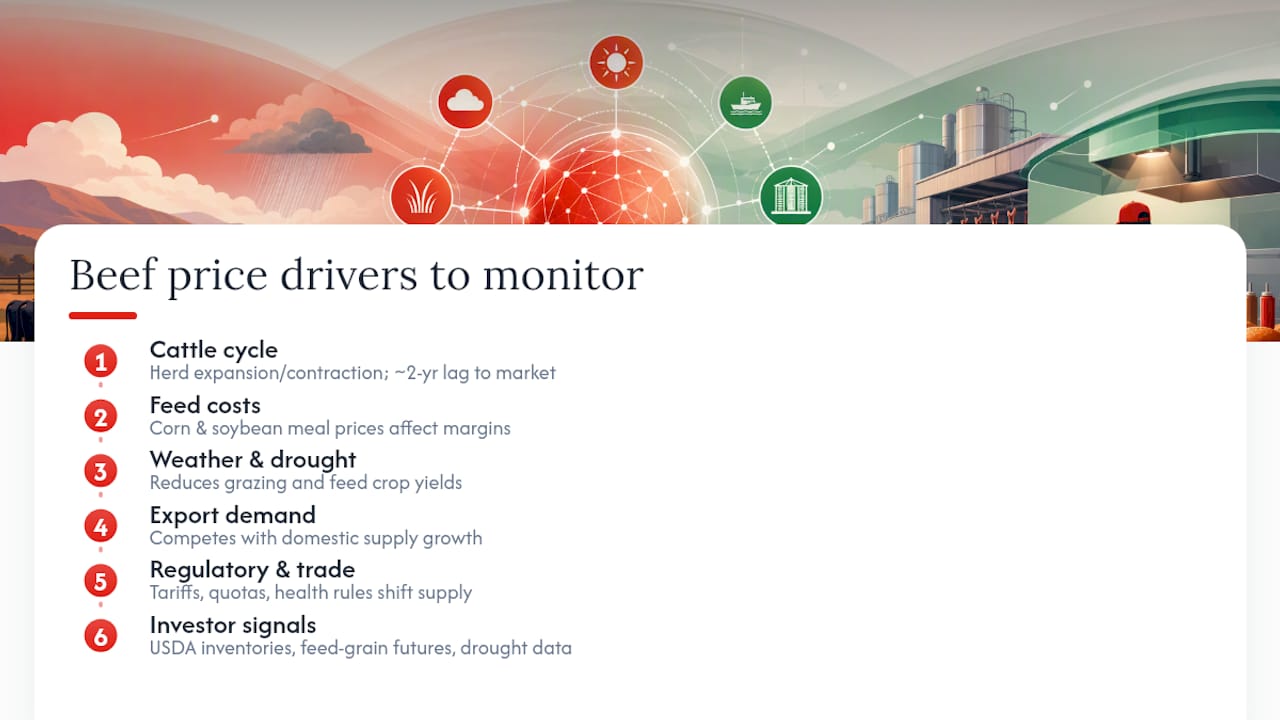
Beef prices move on a cluster of interlocking factors, and monitoring them helps investors anticipate pressure on Wendy’s cost structure before it shows up in a quarterly filing. The cattle cycle itself, the multi-year pattern of herd expansion and contraction driven by rancher profitability, is the single biggest structural driver. When herd sizes contract following a period of drought or low profitability, beef supply tightens for years afterward, since cattle take roughly two years to reach market weight from breeding.
Feed costs, particularly corn and soybean meal prices, directly affect rancher margins and therefore herd-size decisions. A spike in grain prices can push ranchers to cull herds faster, which paradoxically increases short-term beef supply while shrinking the long-term herd and setting up future price increases.
Weather and drought conditions across major cattle-producing regions affect both grazing land availability and feed crop yields simultaneously. Export demand, especially from markets with growing middle-class beef consumption, competes directly with domestic supply. And regulatory or trade policy shifts, tariffs, import quotas, or animal health restrictions, can shift available supply with little warning.
For a company like Wendy’s, watching USDA cattle inventory reports, feed grain futures, and drought monitor data offers a leading indicator of the kind of cost pressure that eventually shows up in QSCC contract renegotiations.
What Can Case Studies Teach About Beef Cost Mitigation?
The broader restaurant industry offers instructive parallels for how supply-chain-based mitigation, rather than financial hedging, tends to perform during periods of beef price stress. Chains that rely heavily on centralized purchasing cooperatives, similar in structure to Wendy’s own QSCC, have generally weathered short-term spot-market spikes better than smaller operators buying beef independently, simply because aggregated volume gives them more negotiating leverage on contract terms.
Where the industry has struggled is during multi-year cattle-cycle contractions, the kind driven by prolonged drought in major cattle states. In those periods, even well-structured procurement contracts eventually reprice, because suppliers themselves are facing higher input costs that can’t be absorbed indefinitely. The lesson for investors following Wendy’s isn’t that upstream partnerships and cooperative purchasing fail. It’s that they change the shape of the risk rather than removing it entirely, converting what might otherwise be sudden cost shocks into a more gradual, negotiated repricing process spread across contract cycles.
This is precisely why Wendy’s own upstream investments in feed efficiency and rancher resilience matter over a longer horizon: they’re an attempt to reduce how often the industry hits those multi-year contraction cycles in the first place, rather than a tool for smoothing the cost impact once a contraction is already underway.
Should Investors Weigh Long-Term or Short-Term Hedging Approaches?
Short-term and long-term approaches to managing beef cost risk serve different purposes, and conflating them leads to modeling mistakes. Short-term tools, tighter contract terms, spot-market buying discipline, and promotional-menu adjustments, help a company absorb a single bad quarter without a major earnings surprise. They’re reactive by nature and tend to show up quickly in quarterly commodity commentary.
Long-term approaches, the kind Wendy’s has leaned into with Fresh Resilience and Legacy Landscapes, aim at the underlying variance in supply rather than the symptom of a price spike. These take years to mature, but they compound: a rancher who adopts better feed-efficiency practices in year one keeps producing more consistent output in year five, which lowers the probability of supply shocks across the entire multi-year forecast period, not just the current cycle.
For budgeting and forecasting purposes, this split matters. A short-term model built purely on current contract terms will understate risk during a cattle-cycle contraction that a multi-year model would catch. Conversely, a long-term model that assumes upstream programs are already fully mature will overstate the near-term protection those programs actually provide, since adoption at scale is still an ongoing, multi-year effort. The most defensible approach blends both horizons: use short-term contract data for the next four to six quarters, then widen the volatility band for anything beyond that until upstream program adoption metrics show clear, sustained improvement.
How Do Disease Outbreaks and Climate Risks Affect Beef Hedging?
Global supply disruptions, animal disease outbreaks, and climate volatility all interact with beef price risk in ways that pure financial hedging can’t fully address, which is part of why Wendy’s strategy leans so heavily on supply-chain resilience instead. A disease outbreak affecting cattle herds, even a regional one, can trigger immediate culling, export restrictions, and supply gaps that ripple through procurement contracts regardless of how favorably those contracts were negotiated.
Climate factors compound this risk in a way that’s become more pronounced over the past several cattle cycles. Prolonged drought reduces grazing land quality and forces earlier herd culling, which tightens supply for years afterward given cattle’s roughly two-year path to market weight. Extreme heat events also directly affect cattle health and weight gain, adding another variable to feed-efficiency calculations that upstream programs like Fresh Resilience are specifically designed to address through better grazing and feed practices.
Global supply chain disruptions, whether from transportation bottlenecks, labor shortages at processing facilities, or trade policy shifts, add a separate layer of risk that shows up as logistics delays rather than pure price increases. This is where Wendy’s investment in producer-level resilience pays off differently than a financial hedge would: a healthier, more adaptable supply base handles a disruption with less total output loss, even if it can’t prevent the disruption itself.
Author Perspective: What Should Investors Do Next?
Watch three things every quarter: QSCC-related procurement commentary in earnings calls, adoption metrics disclosed in Corporate Responsibility updates, and the gap between reported COGS and management’s stated beef-cost assumptions. Franchisees should be asking procurement teams directly how much of their beef volume sits inside negotiated contracts versus spot exposure right now, not last year. Use resources like BuyWendy’s fundamental analysis to stress-test your own valuation against a range of beef-cost scenarios rather than a single assumption.
— Benjamin
How BuyWendy’s Can Help You Model Beef-Cost Risk
BuyWendy’s exists precisely because beef-cost sensitivity is too consequential to leave to a single analyst headline or a generic commodity chart. Where most coverage stops at “beef prices are rising,” BuyWendy’s builds the actual margin math, tying QSCC contract structure, upstream program adoption, and franchise economics into scenario models you can stress-test yourself.
If you’re trying to figure out how a 10%, 20%, or 30% beef-cost move actually flows through to system EBITDA and franchisee cash flow, the Wendy’s Stock Bull vs Bear Case report walks through both scenarios side by side, including the assumptions that separate an overreaction from a genuine margin problem. Readers looking to build out their own free cash flow projections can start with calculating Wendy’s free cash flow as a companion resource. Check the latest reports on BuyWendy’s site to see where beef-cost assumptions stand today.
Sources
- How Wendy’s is De‑Risking its US Beef Supply Chain | Supply Chain Digital
- How Wendy’s is Strengthening its Sustainable Sourcing Policy | Sustainability Magazine
- Wendy’s Q1 2026: Franchise Model Resilience and System Optimization Drive Results — Wendy’s Co — $WEN
FAQ
Does Wendy’s Use Futures Contracts to Hedge Beef Prices?
Wendy’s public disclosures don’t describe an active corporate futures or options program for beef procurement. Instead, the company relies on the Quality Supply Chain Cooperative for negotiated contract terms and upstream producer partnerships to manage supply risk over time.
What Is the Quality Supply Chain Cooperative?
The QSCC is Wendy’s centralized procurement cooperative, which aggregates purchasing volume across U.S. and Canadian operations to negotiate system-wide beef contracts. It gives the franchise system more leverage than any single operator could achieve independently, though it doesn’t remove exposure to major commodity swings.
How Do Upstream Programs Like Fresh Resilience Affect Beef Costs?
Programs like the Fresh Resilience Beef Cattle Programme provide technical assistance and financial incentives to ranchers, aiming to improve feed efficiency and herd resilience over multiple years. These efforts lower the variance in supply gradually rather than locking in a price immediately, according to Supply Chain Digital.
Does Wendy’s Franchise Model Protect Corporate Margins From Beef Cost Spikes?
The asset-light franchise structure means royalties and rents, not restaurant-level food costs, drive most corporate revenue, which insulates Wendy’s from some direct beef-cost impact. Franchisees absorb more of the immediate pressure, and sustained cost stress can eventually affect royalty growth and unit expansion.
Where Can Investors Find Wendy’s Beef-Cost Sensitivity Models?
BuyWendy’s publishes worked margin sensitivity analysis, including a detailed beef-cost margin breakdown and a broader fundamental analysis report that layers QSCC and upstream mitigation assumptions into scenario valuation.