Table of Contents
- Executive Summary: Wendy’s Growth Thesis at a Glance
- WEN Stock Analysis: Valuation and Investment Framework
- Wendy’s Franchise Growth Strategy and Unit Economics
- Wendy’s Digital Transformation Impact on Profitability
- Macroeconomic Headwinds and Competitive Positioning
- Risk Factor Assessment: What Could Derail Growth
- Wendy’s Long-Term Outlook: Systemwide Sales and Margins
- Key Takeaways
Last Updated: August 23, 2026
Executive Summary: Wendy’s Growth Thesis at a Glance
Wendy’s long-term growth potential hinges on three interconnected drivers: franchise expansion through disciplined unit economics, digital transformation powered by AI drive-thru technology, and margin recovery despite macroeconomic headwinds. The company operates an asset-light franchise model where systemwide sales growth and same-restaurant sales performance directly impact franchisee profitability and capital allocation decisions. For investors evaluating The Wendy’s Company (NASDAQ: WEN), understanding how net unit growth targets, adjusted EBITDA algorithms, and technology-driven revenue streams interact is essential to assessing whether the stock represents value or a potential value trap.
This analysis examines Wendy’s long-term growth potential through the lens of franchise viability, operational efficiency, and competitive positioning. The company’s FreshAI drive-thru technology and mobile ordering integration are material to profitability margins, but execution risk remains significant. Macroeconomic headwinds, consumer spending pressure, labor cost inflation, and intense QSR competition create real downside scenarios that most bullish narratives underweight.
WEN Stock Analysis: Valuation and Investment Framework
The investment thesis for Wendy’s long-term growth rests on three pillars: whether the franchise model can sustain net unit growth, whether digital transformation delivers measurable EBITDA accretion, and whether shareholder returns remain sustainable through margin compression cycles.
Valuation Context for WEN Stock
Wendy’s trades at a discount to larger QSR peers, reflecting investor skepticism about turnaround execution and competitive positioning. The critical question is whether current valuation reflects genuine undervaluation or justified caution about the company’s ability to grow systemwide sales in a mature, saturated market.
The bull case assumes same-restaurant sales stabilize and return to modest growth, net unit growth accelerates through franchisee confidence, and digital revenue streams become material to overall profitability. The bear case argues that consumer spending pressure limits same-restaurant sales recovery, franchisees face margin squeeze from labor and commodity inflation, and technology adoption requires sustained capex that pressures near-term returns.
Capital Allocation and Shareholder Returns
Wendy’s must balance reinvestment in technology and restaurant remodels against shareholder distributions. Franchise models generate strong free cash flow, but that cash must fund technology platforms, support franchisee investments, and maintain brand competitiveness. Dividend sustainability depends on maintaining adjusted EBITDA levels despite cost pressures.
Wendy’s Franchise Growth Strategy and Unit Economics
The franchise model is Wendy’s primary growth lever. Unlike company-operated restaurant chains, Wendy’s relies on franchisee capital to fund new unit development and remodels. This asset-light approach reduces corporate capex but creates dependency on franchisee profitability and confidence.
Net Unit Growth Targets and Restaurant Expansion
Net unit growth reflects the balance between new restaurant openings and closures. Positive net unit growth expands the revenue base; negative or stalled growth signals franchisee distress or market saturation. Wendy’s long-term growth potential depends on achieving consistent net unit expansion, particularly in underpenetrated markets or through small-format, non-traditional locations.
Restaurant expansion requires brand strength and consumer demand. Wendy’s competes against McDonald’s, Burger King, and emerging fast-casual chains for consumer traffic and franchisee investment capital. The company’s positioning as a value-conscious QSR with differentiated menu items (fresh beef, customization) supports franchisee confidence, but competitive pressure creates execution risk. For those tracking restaurant performance and expansion trends, Wendy’s News & Restaurant Tracker provides ongoing updates on unit growth initiatives and market expansion strategies.
Unit Economics and Franchisee Profitability
A franchisee’s return on investment depends on average unit volumes (AUV), operating margins, and capital requirements. Higher same-restaurant sales improve unit-level profitability and make new unit development more attractive. Flat or declining same-restaurant sales compress margins and defer expansion plans.
Wendy’s long-term growth is constrained by franchisee economics. If same-restaurant sales stagnate and labor inflation erodes margins, franchisees reduce capex and new unit development slows. This creates a feedback loop: slower unit growth means slower systemwide sales growth, which further pressures franchisee profitability. Breaking this cycle requires either same-restaurant sales recovery or operational excellence improvements that offset cost inflation.
Franchisee Value Proposition and Capital Allocation
The franchisee value proposition determines whether franchisees view Wendy’s as an attractive investment relative to other QSR concepts. Wendy’s corporate strategy focuses on improving franchisee returns through technology adoption, menu innovation, and marketing support. Digital ordering and delivery integration increase transaction volume without proportional cost increases, improving unit-level margins. AI drive-thru technology reduces labor costs and improves throughput, directly benefiting franchisee profitability.
Wendy’s Digital Transformation Impact on Profitability
Digital transformation is central to Wendy’s long-term growth thesis. The company’s FreshAI drive-thru technology, mobile ordering integration, and delivery partnerships are designed to increase revenue streams, improve operational efficiency, and enhance franchisee profitability.
AI Drive-Thru Technology and Revenue Streams
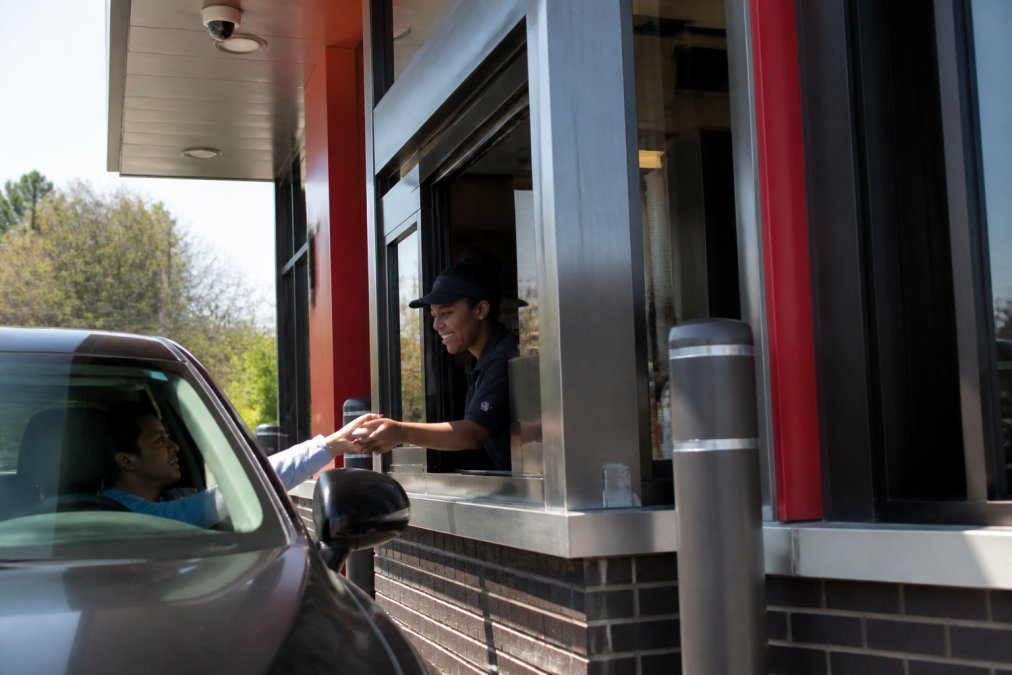
FreshAI is Wendy’s proprietary AI-powered drive-thru technology that uses voice recognition and machine learning to optimize order accuracy, reduce labor costs, and increase transaction throughput. AI-assisted ordering increases order accuracy, reduces labor hours required to staff drive-thrus, and improves throughput during peak periods (peer-reviewed research). These efficiency gains flow directly to franchisee profitability. Additionally, AI can suggest menu items and upsell opportunities, potentially increasing average ticket size. Wendy’s strategy includes corporate co-investment, financing programs, and performance guarantees to encourage franchisee adoption. Success requires demonstrating measurable ROI within 18-36 months of implementation.
Mobile Ordering, Delivery, and Same-Restaurant Sales
Mobile ordering and third-party delivery partnerships create incremental revenue streams outside traditional in-restaurant and drive-thru channels. Same-restaurant sales growth is the most reliable indicator of Wendy’s long-term growth potential. Positive comps signal strong consumer demand, which supports franchisee confidence and unit expansion.
Wendy’s strategy emphasizes owned digital channels (mobile app, website) over third-party platforms to preserve margins. The company’s loyalty program integration with mobile ordering creates customer data and repeat purchase incentives that support predictable revenue. Higher owned-channel penetration improves profitability and reduces platform dependency. Investors and franchisees monitoring digital performance trends can reference Wendy’s Stock & Investor Insights for quarterly updates on digital channel penetration and revenue contribution.
Macroeconomic Headwinds and Competitive Positioning
Wendy’s long-term growth potential is constrained by macroeconomic realities that most bullish narratives underweight. Consumer spending pressure, labor cost inflation, and intense QSR competition create structural headwinds that technology and innovation alone cannot fully offset. business growth strategies.
Consumer Spending and Value Positioning
Wendy’s positions itself as a value-conscious QSR, emphasizing affordable menu options and customization. During economic downturns, value positioning becomes a competitive advantage as consumers trade down from casual dining or premium QSR concepts. However, prolonged consumer spending weakness limits traffic growth and compresses margins as customers shift toward lower-ticket items.
Labor Cost Inflation and Operational Efficiency
Labor represents the largest controllable cost for QSR operators. Minimum wage increases, tighter labor markets, and rising benefit costs directly compress franchisee margins (bls.gov). Wendy’s long-term growth depends on offsetting labor inflation through operational efficiency (AI automation, improved scheduling) or pricing power (menu price increases that don’t trigger traffic loss).
AI drive-thru technology is positioned as a labor cost mitigation strategy, but adoption requires capital investment and carries technology risk. In a high-interest-rate environment, capital availability and borrowing costs become material constraints on franchisee investment in automation.
Competitive Positioning and Market Saturation
Wendy’s competes against McDonald’s, Burger King, and emerging fast-casual concepts. The QSR market is mature and increasingly saturated, particularly in urban markets. Wendy’s differentiation rests on fresh beef positioning, customization options, and digital innovation. These attributes support brand loyalty and franchisee confidence, but competitive response is inevitable. Wendy’s long-term growth advantage depends on execution speed and superior technology implementation relative to larger, better-capitalized competitors.
Risk Factor Assessment: What Could Derail Growth
Franchisee Financial Distress
If same-restaurant sales decline or labor costs surge faster than expected, franchisee unit-level economics deteriorate. Financially stressed franchisees reduce capex and defer new unit development. In extreme scenarios, franchisees may close underperforming units or seek to exit the system, creating negative net unit growth and brand deterioration.
Technology Adoption Risk
FreshAI and other technology initiatives require franchisee capital investment and operational change management. If adoption rates fall short of expectations due to cost concerns, technology reliability issues, or franchisee resistance, the expected EBITDA accretion fails to materialize.
Consumer Spending Recession
A significant economic downturn would pressure consumer discretionary spending on QSR meals. While Wendy’s value positioning provides some downside protection, severe spending weakness could trigger traffic declines that overwhelm margin improvements from operational efficiency.
Commodity and Labor Cost Inflation
Persistent inflation in beef costs, packaging, energy, and labor erodes margins faster than pricing power allows. Menu price increases risk traffic loss, particularly in value-conscious segments.
Wendy’s Long-Term Outlook: Systemwide Sales and Margins
Wendy’s long-term growth potential depends on achieving positive systemwide sales growth while maintaining or expanding adjusted EBITDA margins (sec.gov). The company’s strategic initiatives, digital transformation, AI automation, franchisee support, are designed to drive both revenue and profitability expansion.
Systemwide Sales Growth Trajectory
Systemwide sales growth is the product of same-restaurant sales growth and net unit growth. Positive same-restaurant sales growth reflects strong consumer demand and pricing power. Positive net unit growth expands the revenue base and demonstrates franchisee confidence. Wendy’s historical systemwide sales growth has been modest, reflecting mature market dynamics and competitive intensity. The company’s long-term growth strategy assumes same-restaurant sales stabilize and return to low-single-digit growth, combined with net unit growth in the low-to-mid single-digit percentage range.
Adjusted EBITDA and Margin Expansion
Adjusted EBITDA is the key profitability metric for franchise-model QSR operators. For Wendy’s, adjusted EBITDA growth depends on systemwide sales growth combined with margin expansion from operational efficiency and technology adoption. The company’s financial algorithm for adjusted EBITDA improvement includes: (1) digital revenue mix shift toward higher-margin owned channels, (2) AI-driven labor cost reduction, (3) franchisee support and co-investment in technology to improve unit-level profitability, and (4) corporate cost discipline.
Long-Term Outlook and Investment Implications
For individual investors, Wendy’s long-term growth potential hinges on management’s ability to execute digital transformation, sustain franchisee profitability, and navigate macroeconomic cycles. The bull case assumes technology adoption accelerates, same-restaurant sales stabilize, and net unit growth resumes, supporting adjusted EBITDA expansion. The bear case assumes consumer spending weakness persists, franchisee capital constraints limit technology adoption, and competitive intensity prevents meaningful margin expansion. Current valuation reflects significant skepticism about the bull case, creating opportunity for contrarian investors if the company executes on digital initiatives and same-restaurant sales stabilize.
Key Takeaways
-
Wendy’s long-term growth potential depends on three interconnected drivers: franchise expansion through disciplined unit economics, digital transformation powered by AI technology, and margin recovery despite cost inflation.
-
Net unit growth is constrained by franchisee profitability. If same-restaurant sales stagnate or labor costs surge, franchisees defer capital investment and unit expansion slows, creating negative feedback loops that pressure systemwide sales growth.
-
FreshAI and digital technology adoption are critical to profitability margin expansion. Success requires franchisee confidence in ROI and capital availability. Slow adoption rates would signal execution risk.
-
Macroeconomic headwinds are material and underweighted in bullish narratives. Consumer spending pressure, labor cost inflation, and competitive intensity create structural constraints on same-restaurant sales growth and margin expansion.
-
Valuation reflects skepticism about the turnaround thesis. For individual investors, the key decision is whether current valuation represents genuine undervaluation or justified caution about execution risk and market saturation.
-
Dividend sustainability depends on adjusted EBITDA stability. If technology adoption disappoints or consumer spending weakens, EBITDA compression could force dividend cuts, creating downside risk for income-focused investors.
-
Competitive positioning matters. Wendy’s differentiation through fresh beef, customization, and digital innovation supports franchisee confidence, but larger competitors are also investing in similar capabilities. Execution speed and superior implementation are critical to sustained competitive advantage.
Frequently Asked Questions
Is Wendy's a good stock to buy for long-term growth?
Whether WEN stock suits your portfolio depends on your investment thesis. The bull case centers on AI-driven operational efficiency, franchise expansion potential, and digital sales growth driving adjusted EBITDA expansion. The bear case points to consumer demand sensitivity during economic slowdowns, competitive market saturation, and execution risk on technology rollout. Review the WEN stock analysis section to evaluate both sides against your risk tolerance and time horizon.
What is Wendy's franchise growth strategy, and how does it impact unit economics?
Wendy's targets net unit growth through new restaurant openings while optimizing existing locations. The franchise model generates capital-light revenue through royalties and fees, improving unit economics as franchisees absorb operating costs. Growth depends on franchisee profitability, real estate availability, and consumer demand. Strong unit economics attract new franchisees; weak same-restaurant sales growth signals trouble ahead. Monitor quarterly unit counts and franchisee sentiment for execution signals.
How does AI technology actually improve Wendy's profitability?
AI drive-thru technology increases order accuracy, reduces labor costs, and accelerates throughput during peak hours. Improved accuracy reduces refunds and customer dissatisfaction. Faster service increases transaction volume per location. Digital ordering and delivery integration expand revenue streams beyond in-store sales. These operational gains flow through to adjusted EBITDA and franchisee margins. The key metric is whether systemwide sales growth and profitability metrics improve measurably after AI deployment.
What macroeconomic risks could slow Wendy's long-term growth?
Consumer demand for quick-service restaurants contracts during recessions and periods of rising food inflation. Competition intensifies when consumers trade down or reduce eating-out frequency. Labor cost inflation pressures franchisee margins. Rising interest rates increase franchisee borrowing costs and reduce expansion appetite. Commodity price volatility affects food costs and pricing power. Monitor employment trends, consumer spending data, and wage growth for early warning signals of demand weakness.
This article was written using GrandRanker