Table of Contents
- Executive Summary: Is Fast Food Stock Worth It in 2026?
- Fast Food Industry Trends 2026: What’s Changing
- Top Fast Food Stocks 2026: Which Ones Merit Investment
- Fast Food Franchise Model Investment: Resilience and Risks
- Impact of Inflation on Fast Food Stocks: Menu Pricing Reality
- Turnaround Plans and Management Strategy: Can They Deliver?
- Should You Buy Fast Food Stock in 2026? Key Decision Framework
- Key Takeaways
Is Fast Food Stock Worth It in 2026? Investment Guide
Last Updated: July 25, 2026
Executive Summary: Is Fast Food Stock Worth It in 2026?
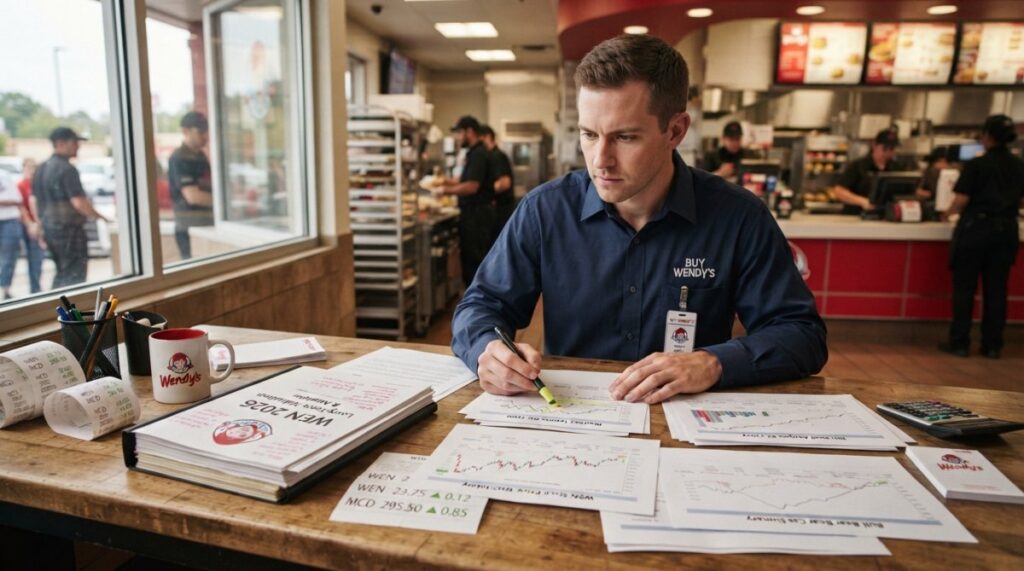
The question of whether is fast food stock worth it 2026 hinges on a critical tension: consumer demand remains resilient, yet margin compression from inflation and wage pressure has made traditional QSR operators increasingly vulnerable. At Buy Wendy’s, we track these dynamics closely to help individual investors distinguish between genuine turnaround opportunities and value traps disguised as bargains. The fast food sector enters 2026 at an inflection point where some operators are deploying advanced technology and strategic pricing to stabilize margins, while others face structural headwinds that may not reverse.
This guide examines the bull case (digital transformation, AI-driven efficiency, dividend sustainability) and the bear case (traffic declines, franchisee stress, competitive intensity). By the end, you’ll have a framework to evaluate whether fast food stocks merit a place in your portfolio.
Fast Food Industry Trends 2026: What’s Changing
Consumer spending patterns in the fast food sector have shifted meaningfully. Traffic trends vary dramatically by price point and geography, with value-oriented chains showing more resilience than premium concepts. Technological integration, particularly AI-powered drive-thru systems and mobile ordering, has become a competitive necessity.
Consumer Spending Patterns and Economic Headwinds
The consumer remains bifurcated. Lower-income households have pulled back on frequency visits to quick-service restaurants, while middle and upper-income consumers continue to trade up to fast casual or full-service options. This creates a squeeze for traditional QSR operators positioned in the middle.
Inflation has reshaped the value equation. Menu prices have climbed significantly, and while operators have passed through much of their cost inflation, the elasticity of demand is real. Customers respond to price increases by visiting less frequently or switching to competitors offering better perceived value.
Labor costs remain elevated. Minimum wage increases in key markets and competitive pressure for crew hiring have compressed unit-level profitability. Franchisees are particularly exposed; they lack the scale to absorb cost increases and must negotiate with corporate on menu pricing and support.
The “affordability crisis” in QSR is real. When a combo meal approaches premium pricing levels, price-sensitive customers defect. This reflects structural cost inflation that shows no sign of reversing.
Technology Integration and Digital Ordering ROI
Digital ordering now represents 25-35% of sales at mature operators and carries significantly higher margins than in-restaurant transactions. Mobile app adoption continues to climb, driven by loyalty program incentives and frictionless payment integration.
AI-powered drive-thru technology is the most visible innovation. These systems reduce labor costs, improve order accuracy, and create data trails for menu optimization. However, the ROI timeline matters. Early deployments show promise, but scaling across thousands of units requires capital and operational discipline.
The real opportunity lies in data. Digital channels generate customer behavior data that enables targeted promotions, menu engineering, and inventory optimization.
| Technology Initiative | Adoption Rate | Primary Benefit | Timeline to ROI |
|---|---|---|---|
| Mobile app ordering | 70%+ | Higher margins, customer data | 12-18 months |
| AI drive-thru | 15-25% | Labor efficiency, accuracy | 24-36 months |
| Loyalty program integration | 80%+ | Repeat visits, data collection | 6-12 months |
| Predictive inventory | 30-40% | Waste reduction, freshness | 18-24 months |
Top Fast Food Stocks 2026: Which Ones Merit Investment
The sector spans multiple business models: pure franchisors (asset-light), operators with significant company-owned units, and hybrids. This diversity matters for valuation and risk assessment.
Valuation Metrics and 52-Week Performance
Stock valuations in the QSR sector have compressed significantly from 2024 levels. Many operators trade at single-digit forward P/E multiples, driven by margin concerns and traffic uncertainty. However, low valuation is not the same as cheap; a stock can be cheap and get cheaper.
Key metrics to watch: free cash flow (not just earnings), same-store sales trends, franchisee unit economics, and dividend coverage ratios. For investors seeking data-driven insights into operator performance, Wendy’s Stock & Investor Insights provides detailed tracking of financial metrics and competitive positioning across the sector.
Is fast food stock worth it 2026? The answer depends on your thesis. If you believe operators will successfully stabilize margins through technology and selective pricing, valuations offer entry points. If you think traffic erosion and franchisee stress will persist, current prices may not be low enough.
Valuation alone doesn’t answer the investment question. A stock trading at low multiples is only a bargain if earnings are sustainable. For QSR, that’s the central debate.
Dividend Sustainability vs. Value Trap Risk
Many fast food operators have historically offered attractive dividend yields. However, 2026 has forced a reckoning. Several operators have cut or suspended dividends as free cash flow tightened. Others have maintained payouts while debt levels crept higher, raising questions about sustainability.
The math is straightforward: if an operator generates sufficient free cash flow to cover dividends, the payout is sustainable. If free cash flow falls while the dividend remains unchanged, the company is either cutting the dividend or funding it with debt. Neither outcome is attractive for income investors.
Buy Wendy’s tracks dividend coverage ratios closely because they reveal management’s true confidence in the business. A cut dividend is often a leading indicator of deeper operational stress.
Fast Food Franchise Model Investment: Resilience and Risks
The franchise model has been the bedrock of QSR growth for decades. Franchisees bear the operational risk and capital requirements, while corporate collects royalties and maintains brand standards. In theory, this is elegant. In practice, 2026 has exposed serious strains.
Franchisee Economics and Unit-Level Profitability
Unit-level profitability has deteriorated for many franchisees. Labor costs have climbed, rent is sticky, and food costs remain elevated. Meanwhile, corporate has pushed for menu price increases to protect corporate margins, but franchisees bear the traffic risk when customers balk at higher prices.
The typical franchisee operates on thin margins where a 2-3% decline in traffic can eliminate profitability. When this happens, franchisees stop reinvesting in equipment, defer maintenance, and become reluctant to open new units. This creates a vicious cycle: lower-quality units attract fewer customers, traffic declines further, and the operator eventually closes or transfers the franchise.
A healthy franchise system requires franchisees to earn attractive returns. When franchisee economics deteriorate, corporate eventually faces pressure to reduce royalty rates or provide operational support. Either way, corporate earnings suffer.
Track franchisee sentiment through earnings calls and franchise advisory board commentary. When franchisees are struggling, corporate earnings usually deteriorate 12-18 months later. Early warning signs include reduced unit growth, higher closure rates, and franchisee requests for relief.
Supply Chain Cost Breakdown and Margin Pressure
Food cost inflation has moderated from 2022-2024 peaks but remains elevated relative to historical norms. Beef, chicken, and commodity inputs are subject to weather, geopolitical, and currency dynamics outside corporate control.
Labor represents the second major cost driver. Unlike food costs, labor costs are sticky; they don’t fall when demand falls. A franchisee with 15 crew members has limited flexibility to reduce headcount if traffic declines 10%.
Impact of Inflation on Fast Food Stocks: Menu Pricing Reality
Menu price increases have been aggressive since 2023. Most operators have pushed through cumulative price increases over two years. The question is whether customers will accept further increases or whether elasticity has been exhausted.
Price Increases and Customer Traffic Trade-Offs
The trade-off is real. Every price increase generates revenue per transaction but risks reducing transaction frequency. For value-conscious consumers, the trade-off has become unfavorable. A customer who visited twice weekly at lower prices might visit once weekly at higher prices; revenue is flat, but the operator has lost a customer visit.
This dynamic has played out differently across price tiers. Budget chains have seen more traffic pressure than premium concepts, suggesting elasticity is higher for price-sensitive customers. If you’re an investor in a value-oriented chain, traffic trends are your primary concern.
The inflation-adjusted menu price is now at levels that may constrain further increases. Corporate guidance on pricing for 2026-2027 will be a critical signal. If management signals continued aggressive pricing, it’s a bet that demand elasticity remains low. If management signals moderation, it’s an admission that traffic is at risk.
Competitive Positioning in a High-Cost Environment
Competitive intensity has increased. Fast casual operators have captured share from traditional QSR by offering perceived quality advantages and customization. Traditional QSR has responded with menu innovation, technology, and value positioning.
The competitive landscape is now three-tiered: budget QSR (dollar menus, value positioning), mainstream QSR (balanced value and quality), and fast casual (premium positioning, higher price points). Each tier faces different pressures. Budget QSR faces traffic declines as prices rise. Mainstream QSR faces margin pressure from elevated costs. Fast casual faces traffic pressure from economic uncertainty.
Is fast food stock worth it 2026? Competitive positioning matters immensely. Operators with differentiated menus, strong brand loyalty, or superior unit economics have better odds of navigating this environment.
Turnaround Plans and Management Strategy: Can They Deliver?
Several operators have announced turnaround initiatives focused on technology, operational efficiency, and selective pricing. The credibility of these plans varies widely, and execution risk is substantial.
C-Suite Leadership Changes and Strategic Initiatives
Leadership transitions can signal either a genuine strategic reset or desperation. When an operator brings in a new CEO from outside the QSR industry, it often indicates a desire to challenge conventional thinking.
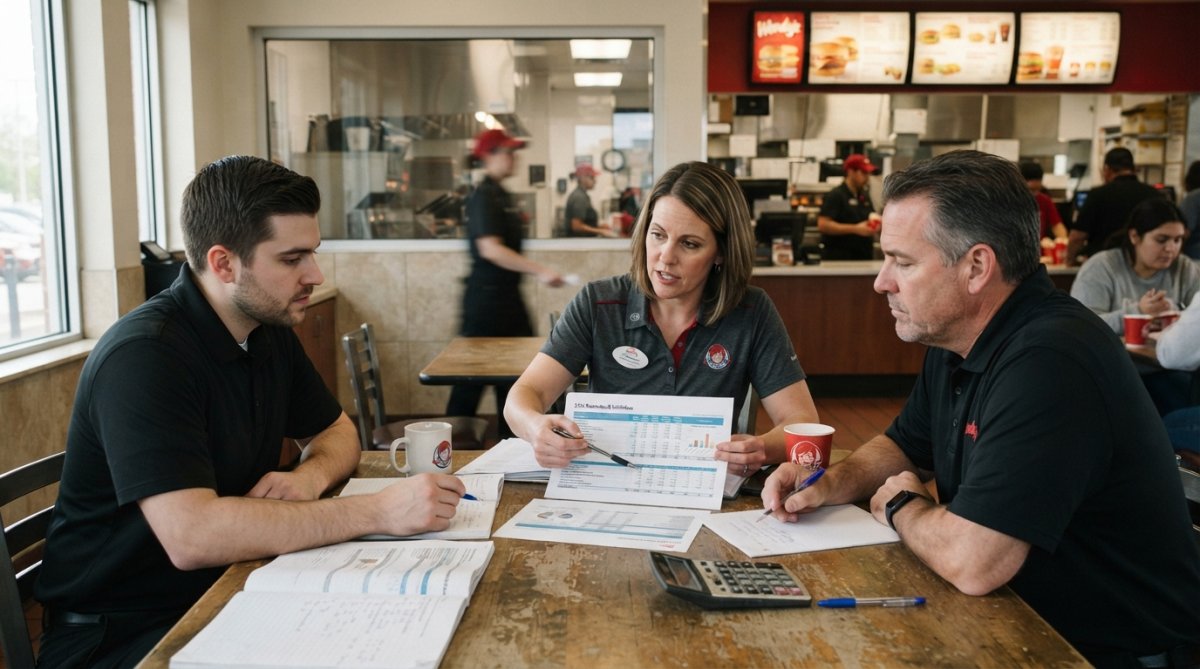
Specific initiatives to watch: menu simplification (reduces complexity, improves throughput), labor automation (reduces headcount, improves consistency), franchisee support programs (reduces churn, stabilizes the system), and capital allocation discipline (prioritizes high-return investments, reduces waste).
The test of credibility is execution. A well-articulated strategy that misses targets for two consecutive quarters is a yellow flag. A strategy that delivers measurable improvements (traffic, margins, franchisee profitability) is a green flag.
Digital Transformation and AI Drive-Thru Technology
AI-powered drive-thru systems are the flagship technology initiative for several operators. These systems use voice recognition and machine learning to take orders, reduce errors, and optimize menu recommendations. The potential is significant: labor savings, improved accuracy, and better customer data.
However, implementation risk is real. Early deployments have encountered technical challenges, customer resistance, and integration complexity. The ROI timeline is 24-36 months, which means investors won’t see financial impact until late 2027 or 2028. If management claims AI will drive margin expansion but the company is still in pilot phase, the claim is premature.
The smarter approach is to view digital transformation as a multi-year journey. Technology is one component, but operational discipline, franchisee alignment, and customer acceptance are equally important. Operators who acknowledge this complexity and communicate realistic timelines are more credible. For detailed analysis of how operators are deploying technology and its impact on operations, Wendy’s News & Restaurant Tracker provides ongoing coverage of industry developments and strategic initiatives.
Should You Buy Fast Food Stock in 2026? Key Decision Framework
The investment decision hinges on two core questions: (1) Will operators stabilize margins through technology and operational efficiency? (2) Will consumer traffic stabilize or decline further?
Bull Case: Growth Catalysts and Rebound Potential
The bull case rests on several pillars. First, technology deployment is accelerating. AI drive-thru systems, mobile ordering, and data analytics are creating efficiency gains that offset cost inflation. If these technologies deliver measurable margin expansion, valuations could re-rate higher.
Second, menu price increases have slowed, suggesting the worst of inflation pass-through is behind us. If input cost inflation moderates and operators can stabilize pricing, margins could stabilize or expand modestly.
Third, franchisee economics may improve if corporate provides relief through reduced royalty rates or operational support. A healthier franchise system would stabilize unit growth and reduce churn.
Fourth, valuations are attractive for patient capital. If the sector stabilizes, investors who bought at depressed valuations could see meaningful upside over a 2-3 year horizon.
Bear Case: Structural Headwinds and Market Sentiment
The bear case is equally compelling. First, consumer traffic trends remain uncertain. Value-conscious customers are pulling back, and it’s unclear whether this is cyclical or structural. If traffic continues to decline, margin expansion becomes impossible.
Second, franchisee stress is real and visible. Unit closures, reduced new unit growth, and franchisee requests for relief suggest the system is under strain. If franchisee economics don’t improve materially, the franchise system could deteriorate further.
Third, competitive intensity is increasing. Fast casual operators are stealing share, and private equity-backed competitors are deploying capital aggressively. Traditional QSR operators may be fighting a losing battle for market share.
Fourth, debt levels are elevated. Several operators have taken on debt to fund buybacks or maintain dividends. If earnings decline further, debt could become problematic, forcing dividend cuts or asset sales.
The bear case concludes that current valuations appear cheap but may not be low enough to compensate for structural headwinds.
The bull and bear cases are both defensible. This is not a “clear buy” or “clear sell” situation. The outcome depends on execution, consumer behavior, and macro conditions over the next 12-24 months. Position sizing matters.
Key Takeaways
-
Is fast food stock worth it 2026? The answer is conditional. Valuations are attractive, but margin sustainability and traffic trends are uncertain. Investors need a clear thesis about which operator will successfully navigate the current environment.
-
Technology deployment is real but not a silver bullet. AI drive-thru systems and digital ordering are valuable, but they take 2-3 years to deliver meaningful financial impact. Don’t extrapolate pilot results to company-wide earnings.
-
Franchisee economics are the canary in the coal mine. If franchisees are struggling, corporate earnings will deteriorate 12-18 months later. Monitor franchisee sentiment closely.
-
Dividend sustainability matters. Many QSR operators have attractive yields, but if free cash flow is declining, dividends are at risk. Check the math before assuming the yield is safe.
-
Competitive positioning varies widely. Operators with differentiated menus, strong brands, and superior unit economics have better odds than undifferentiated players. Don’t treat the sector as monolithic.
-
Valuation is necessary but not sufficient. A low P/E ratio doesn’t guarantee returns if earnings are under pressure. Combine valuation metrics with operational trends and competitive positioning.
Frequently Asked Questions
What makes a fast food stock worth buying in 2026 versus other sectors?
Fast food stocks can offer defensive characteristics during economic uncertainty, stable cash flows from franchise models, and dividend income. However, they face structural challenges including menu price sensitivity, labor cost inflation, and intense competition. Worth evaluating depends on your risk tolerance, dividend needs, and belief in a company's turnaround plan. Compare valuation multiples, debt levels, and same-store sales trends against historical averages and sector peers.
How do fast food industry trends 2026 affect investment returns?
Key 2026 trends include digital ordering adoption, labor cost pressures, consumer shift toward value positioning, and AI-driven efficiency gains. Companies investing in technology and maintaining competitive menu pricing may capture market share, while those failing to adapt face margin compression. Rising consumer spending uncertainty also pressures traffic growth. Investors should track quarterly same-store sales, labor cost percentages, and digital sales mix as leading indicators.
Is the fast food franchise model still resilient as an investment?
The franchise model remains resilient because it transfers real estate and labor risk to franchisees while corporate collects royalties and rent. However, franchisee profitability is under pressure from wage inflation, commodity costs, and rent burdens. Strong corporate support through supply chain efficiency, technology ROI, and brand marketing directly impacts franchisee unit economics. Investors should examine franchisee satisfaction surveys and new unit development rates as health indicators.
How does inflation impact fast food stock valuations and dividend safety?
Inflation pressures fast food stocks through higher labor, commodity, and energy costs. Companies that successfully pass costs to consumers via menu price increases protect margins, but risk traffic declines. Dividend sustainability depends on free cash flow after these cost increases. Watch for debt-to-EBITDA ratios and payout ratios, if either rises sharply, dividend safety weakens. Sector leaders with pricing power and operational efficiency typically maintain safer payouts than struggling competitors.
This article was written using GrandRanker