
Table of Contents
- Executive Summary: The Core of Wendy’s Competitive Advantage
- Key Strategic Pillars Behind Wendy’s Competitive Advantage in QSR
- Wendy’s SWOT Analysis: Strengths, Weaknesses, Opportunities, Threats
- Evaluating Wendy’s Digital Transformation Strategy and FreshAI
- Financial Moat: A WEN Stock Dividend Analysis and Capital Allocation Review
- Competitive Pressures: Market Share, Rivalry, and Differentiation
- What Investors Often Miss: Labor, ESG, and Franchise Dynamics
- Conclusion: A Sustainable Competitive Advantage or a Value Trap?
- Frequently Asked Questions
Last Updated: September 8, 2026
Executive Summary: The Core of Wendy’s Competitive Advantage
Evaluating Wendy’s competitive advantage in QSR requires looking beyond the burger itself to the structural choices management has made over the past decade. A competitive advantage is a durable edge that lets a company earn above-average returns over time, and for The Wendy’s Company (NASDAQ: WEN), that edge rests on three pillars: a differentiated “fresh, never frozen” brand promise, an aggressive digital transformation led by the FreshAI drive-thru initiative, and a capital allocation strategy that prioritizes shareholder returns through a substantial dividend. This analysis from Buy Wendy’s examines whether these pillars create a genuine moat or merely keep the company competitive in an intensely crowded quick-service restaurant landscape.
The fast-food industry is defined by intense rivalry, razor-thin profit margins, and constant menu innovation, making sustained differentiation difficult. Wendy’s has carved out a specific value proposition centered on quality perception and technological efficiency, but it operates without the sheer global scale of its largest competitors. Below, we’ll break down the strategic pillars, weigh the strengths and weaknesses through a SWOT framework, and assess whether the financial metrics support a durable competitive advantage or signal a potential value trap for investors.
Key Strategic Pillars Behind Wendy’s Competitive Advantage in QSR
Wendy’s competitive strategy is best understood as a hybrid approach, combining elements of cost leadership with a clear differentiation strategy. While the company does not compete purely on being the cheapest option, it uses operational efficiency to keep prices competitive, then differentiates on product quality, specifically its square patties made from fresh, never frozen beef, and its modern restaurant image.
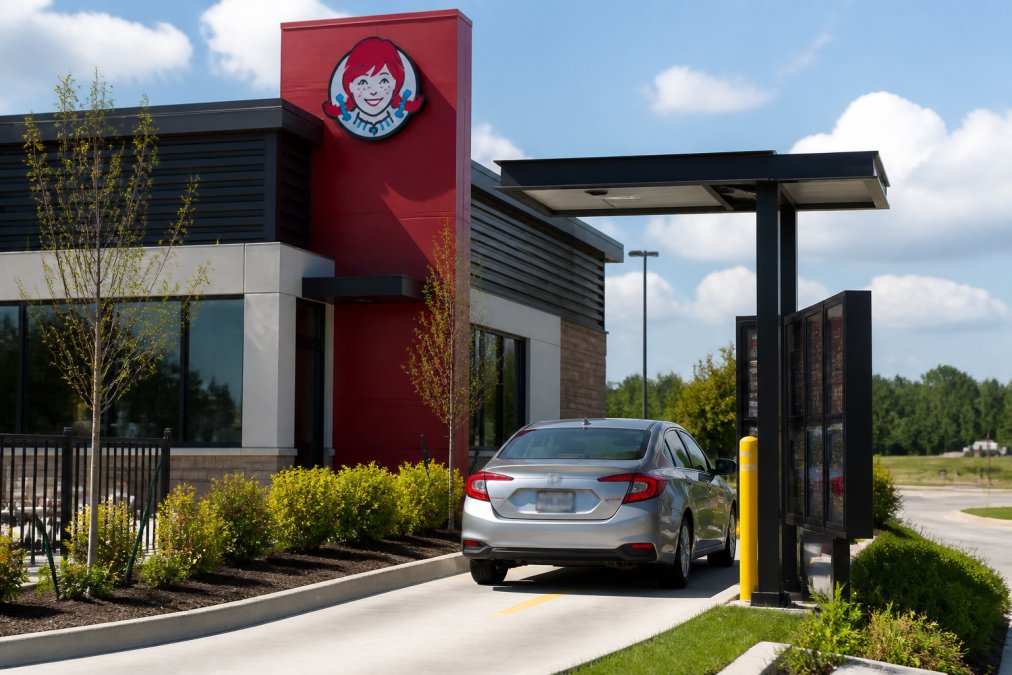
This positioning supports a strong value proposition aimed at the “quality-conscious fast-food consumer.” According to the National Bureau of Economic Research’s analysis of fast-food competition, brand differentiation through quality perception is a key driver of market share in localized QSR markets. For a closer look at how individual locations uphold this standard, our Wendy’s Cleanliness Ratings and Wendy’s Restaurant Reviews track real-world execution at the store level.
The pillars supporting this strategy include:
- Menu Innovation: A consistent pipeline of limited-time offers and premium items like the Pretzel Bacon Pub, which drive traffic and create buzz.
- Supply Chain Optimization: A supply chain focused on quality helps control costs and quality.
- Franchise Model: A predominantly franchised model (roughly 95% of restaurants) allows for asset-light growth and generates stable royalty and rental revenue streams (sec.gov).
Wendy’s SWOT Analysis: Strengths, Weaknesses, Opportunities, Threats
A SWOT analysis provides a structured view of the internal and external factors affecting Wendy’s strategic positioning.
| Category | Key Factors | Strategic Implication |
|---|---|---|
| Strengths | Brand equity in “fresh, never frozen,” strong breakfast daypart growth, proprietary FreshAI tech | Foundation for differentiation and operational excellence |
| Weaknesses | Smaller global footprint vs. peers, higher average check price, dependence on North American market | Limits economies of scale and exposes to regional saturation |
| Opportunities | International expansion, AI-driven labor cost reduction, digital loyalty program growth | Potential for revenue growth and profit margin expansion |
| Threats | Intense industry rivalry, rising labor costs, consumer sentiment shifts toward value, commodity price inflation | Pressure on market share and profitability |
Wendy’s strengths lie in its powerful brand recognition and a differentiated product that resonates with consumers seeking quality. However, its weaknesses include a smaller scale compared to global leaders like McDonald’s, which impacts its purchasing power and ability to spread fixed costs. The most significant opportunities involve using its digital transformation strategy to reduce labor costs and enhance the customer experience through personalization. Conversely, the primary threats are external, including aggressive value menus from competitors and a volatile macroeconomic environment that pressures consumer spending.
Evaluating Wendy’s Digital Transformation Strategy and FreshAI
Wendy’s digital transformation strategy is arguably its most significant attempt to build a modern competitive advantage. The centerpiece is FreshAI, an artificial intelligence-powered drive-thru ordering system developed in collaboration with Google (google.com). The goal is not just automation, but addressing the industry’s biggest operational challenge: labor.
The strategy uses AI to handle complex, conversational drive-thru orders, aiming to improve order accuracy, increase throughput, and allow human staff to focus on food preparation and customer service. This directly targets operational excellence by potentially reducing the cost-to-serve per transaction, a critical metric in a low-margin industry.
This sentiment, common across the industry, underscores Wendy’s intent to use technology for augmentation rather than pure replacement.
Investors should watch how this technology moves the needle on key performance indicators like average service time and labor cost as a percentage of sales. If successful, FreshAI could provide a sustainable edge in operational efficiency that competitors would find difficult to replicate quickly, given the complexity of integrating AI with varied menu items and customer speech patterns. Our Wendy’s Wi-Fi Quality Tests offer a related look at how the chain’s in-restaurant technology infrastructure supports the broader digital customer experience.
Financial Moat: A WEN Stock Dividend Analysis and Capital Allocation Review
For investors, the financial moat is often evaluated through the lens of capital allocation and shareholder returns. Wendy’s operates an asset-light, heavily franchised model, which generates significant free cash flow. Management has chosen to return a substantial portion of this cash to shareholders via a consistent and growing dividend, making the stock a favorite among income-focused retail investors.
A key question in any WEN stock dividend analysis is sustainability. The payout ratio, or the percentage of earnings paid out as dividends, is a critical metric here. A payout ratio that is consistently above 100% of free cash flow would signal potential risk. However, the stability of the franchise model provides a relatively predictable revenue stream from royalties, which supports the dividend through various economic cycles. For ongoing coverage of these financial metrics and system-wide performance, our Wendy’s Stock & Investor Insights page tracks the latest developments.
The company’s capital allocation strategy also includes reinvestment in technology and restaurant remodels, which are essential for long-term brand relevance. The tension between reinvesting for growth and returning capital to shareholders is a classic strategic management challenge. Wendy’s appears to be attempting both, but the success of this balancing act will determine whether the stock is a value proposition or a value trap. Investors must monitor same-restaurant sales growth against the backdrop of rising capital expenditure requirements for digital and AI infrastructure.
Competitive Pressures: Market Share, Rivalry, and Differentiation
The QSR industry is characterized by intense industry rivalry, high barriers to entry in terms of brand building, and significant market saturation in the United States. Wendy’s competes for market share not just on price, but on convenience, taste, and now, technological experience. The “burger wars” have escalated with aggressive value meal deals, putting pressure on profit margins across the sector.
To maintain its differentiation strategy, Wendy’s must continually innovate on its menu while ensuring its value proposition remains compelling. The company’s focus on higher-quality ingredients gives it a distinct position versus pure cost leaders, but it also makes it vulnerable if consumer sentiment shifts sharply toward the lowest possible price during an economic downturn. The rise of digital ordering has also increased consumer price transparency, intensifying competition and making it easier for customers to compare costs across brands instantly.
Ultimately, Wendy’s market share is defended by its brand equity and the perceived quality of its food. However, in a mature market, growth often comes at the expense of competitors, requiring constant investment in marketing and restaurant-level execution to win the daily traffic battle. chain restaurant dynamics.
What Investors Often Miss: Labor, ESG, and Franchise Dynamics
Standard strategic frameworks often overlook the modern operational realities that significantly impact Wendy’s competitive advantage. Three factors are critical: labor market dynamics, ESG and sustainability impact, and the franchise-corporate relationship model.
Labor market dynamics are a primary concern. With rising minimum wages in various states and a competitive market for entry-level workers, labor costs are a major pressure point for both corporate and franchise locations. Wendy’s strategy to mitigate this involves both its FreshAI technology and its operational efficiency, but the success of these initiatives directly impacts franchisee profitability and, consequently, the health of the entire system.
The franchise-corporate relationship is the bedrock of the asset-light model. Unlike a fully corporate-owned chain, Wendy’s growth depends on the financial health and alignment of its franchisees. Disputes over technology costs, menu pricing, or marketing funds can create friction and slow down the implementation of system-wide initiatives. A collaborative relationship is essential for executing the digital transformation strategy uniformly across thousands of locations.
Finally, ESG factors, particularly sustainability and packaging, are becoming increasingly important to both consumers and institutional investors. Wendy’s has set goals around reducing its carbon footprint and improving its supply chain’s sustainability, but progress in these areas can be slower and more costly than anticipated, representing a long-term challenge to cost leadership.
Conclusion: A Sustainable Competitive Advantage or a Value Trap?
Determining whether Wendy’s has a sustainable competitive advantage or is a value trap requires a balanced assessment of its strategic execution. The company possesses real, defensible strengths: a differentiated brand, a strong franchise model, and a proactive approach to digital transformation. These elements support market share and provide a foundation for long-term profitability. The high dividend yield is attractive, but it must be weighed against the capital expenditures required to stay competitive.
The bear case argues that Wendy’s lacks the global scale of its primary rivals, leaving it vulnerable to market saturation in its core markets. The bull case posits that its technological lead in AI ordering and its focus on quality will drive superior same-restaurant sales growth and margin expansion.
For investors, the key takeaway is that Wendy’s is not a low-risk, no-growth utility. It is a company actively trying to build a moat in a highly competitive industry through technology and product differentiation. The success of this strategy will be reflected in its ability to grow revenue while maintaining or expanding profit margins. Investors should track same-restaurant sales, digital sales penetration, and the rollout progress of FreshAI as the primary indicators of whether the competitive advantage is widening or narrowing.
Key Takeaways:
- Wendy’s competitive advantage in QSR rests on a hybrid strategy of quality differentiation and technological efficiency, not on being the lowest-cost provider.
- The digital transformation strategy, led by FreshAI, is the most significant potential source of a new, durable edge in operational excellence.
- The high dividend yield is a core part of the investment thesis, but its safety depends on the stability of the franchise model and prudent capital allocation.
- Investors must monitor competitive pressures from value menus and the health of the franchise-corporate relationship, which are critical to executing the company’s growth plans.
Frequently Asked Questions
What is Wendy’s primary competitive advantage in the QSR industry?
Wendy’s competitive advantage rests on a differentiation strategy built around its ‘Fresh, Never Frozen’ beef proposition and a strong brand identity. This is complemented by a focus on operational excellence through investments in digital transformation, particularly its AI drive-thru technology. These elements work together to enhance customer experience and drive store-level profitability, distinguishing it from pure cost-leadership competitors.
How does Wendy’s AI-driven drive-thru technology impact its competitive position?
The AI drive-thru, part of Wendy’s digital transformation strategy, aims to improve order accuracy, speed of service, and labor efficiency. By automating order-taking, it potentially lowers operational costs and improves the customer experience. Successful implementation creates a technological edge, as it can streamline operations and free up staff for other tasks, contributing to better profit margins and franchisee satisfaction.
What are the key risks to Wendy’s competitive advantage?
Key risks include intense industry rivalry from larger players like McDonald’s and Burger King, who have significant marketing budgets. The franchise model also presents risks related to franchisee-corporate alignment on technology investments. Furthermore, the fast-food industry faces inherent threats from changing consumer preferences, labor market dynamics, and supply chain pressures that could impact the cost structure and brand equity.
What financial metrics should investors track when evaluating Wendy’s competitive advantage?
Investors should monitor same-restaurant sales growth, which indicates brand health. Company-operated restaurant margin is another key performance indicator, alongside franchise royalty revenue. In a WEN stock dividend analysis, the dividend payout ratio is crucial for assessing sustainability. Tracking digital sales mix and average check size helps gauge the effectiveness of the digital transformation strategy.