Wendy’s price positioning rests on a dual structure: aggressive value bundles like Biggie Deals anchor the low end while the Made to Crave lineup protects premium margins, and management is now testing AI-enabled dynamic pricing on top of that architecture. The approach balances visit frequency against check size, but the dynamic-pricing experiment may carry reputational risk that marketers and investors need to watch.
TL;DR:
- Wendy’s low-end pricing strategy relies on fixed value bundles like Biggie Deals, designed to control food costs and attract price-sensitive customers.
- The company uses regional menu flexibility and suggestive selling to steer transactions toward higher-margin core and premium items.
- Testing AI-driven dynamic pricing involves real-time menu adjustments, but consumer backlash and trust issues make broad adoption risky.
- Delivery and app personalization pricing help manage margins, with in-store prices remaining stable to preserve brand trust.
- Franchise economics favor maintaining transaction volume through value bundles, even if franchisee margins face pressure from inflation and rising costs.
Table of Contents
- How does market-oriented pricing shape Wendy’s menu?
- What is the Biggie Deals bundle strategy?
- Why did Wendy’s announce dynamic pricing, and what happened next?
- How does Wendy’s price differently across channels and dayparts?
- How do pricing changes flow through to franchise economics?
- How should analysts evaluate a Wendy’s price move?
- What does Buywendys’ financial data say about Wendy’s pricing leverage?
- What should marketers and analysts take away from Wendy’s pricing playbook?
- Sources
How does market-oriented pricing shape Wendy’s menu?
Wendy’s builds its everyday pricing around market-oriented pricing, meaning menu prices track what competitors charge and what customers will tolerate in a given trade area, rather than starting from a fixed cost-plus formula. Franchise-level flexibility matters here: individual operators can adjust prices to local labor and rent conditions, which is one reason prices vary by region even for identical items.
That flexibility feeds a value ladder with three rungs. Entry-level anchors (the Biggie Deals tier) pull in price-sensitive traffic. Core menu items, sandwiches like the Baconator or Dave’s Single, carry the bulk of transaction volume and margin. The Made to Crave tier sits at the top, using premium ingredients to justify a higher check without diluting the value message at the bottom.
- Entry anchors set the psychological floor for “what a meal costs here.”
- Core items generate the steadiest per-unit margin across dayparts.
- Premium items train customers to trade up, lifting average check on the same visit.
Mix management, steering customers toward higher-margin combinations through suggestive selling and app prompts, is what keeps this ladder from cannibalizing profit at the low end.
What is the Biggie Deals bundle strategy?
Wendy’s introduced the Biggie Deals menu with three fixed tiers: a $4 Biggie Bites option, a $6 Biggie Bag, and an $8 Biggie Bundle, rolled out nationwide with the usual caveat that participation and pricing vary by location. Each tier bundles a protein item, a side, and a drink at a fixed price point, which lets Wendy’s control food cost through portion discipline instead of ad hoc markdowns.
- Protein choices rotate (chicken, junior burgers) to manage ingredient cost swings.
- Fixed portions cap food cost variance across thousands of franchised locations.
- Attachment items (drinks, fries) carry disproportionately high margin relative to price.
Bundles beat one-off deep discounts for a structural reason: a $1 off coupon erodes margin on a single item with no offsetting upsell, while a bundle locks in a predictable combo where the drink and fries subsidize the protein. Industry analysis of the Biggie Deals launch frames this as a deliberate response to inflation fatigue, not a simple markdown. That distinction matters for franchisees, whose royalty payments track gross sales rather than store-level profit, so a bundle that sustains traffic protects the whole system even when per-unit margin compresses slightly. Details on how these tiers interact with menu-wide pricing are covered in Buywendys’ menu pricing analysis.
Why did Wendy’s announce dynamic pricing, and what happened next?
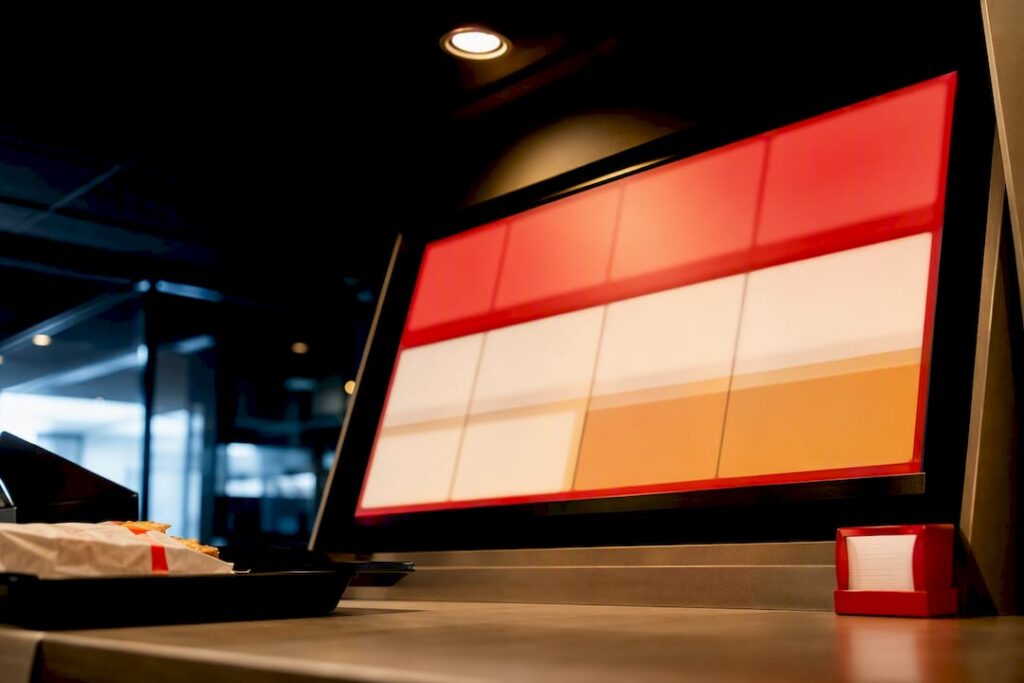
Wendy’s disclosed on an earnings call that it planned to test AI-driven menu changes and dynamic pricing starting in 2025, backed by a $20 million investment in digital menu boards capable of changing prices in real time. The announcement drew immediate comparisons to Uber-style surge pricing, and the comparison stuck.
Coverage from Northeastern University documented widespread consumer backlash, with critics framing the plan as price gouging rather than the demand-based promotions Wendy’s said it intended. That reaction underscores a structural problem: fast food operates on trust in a stable, memorized price point, and any hint of a fluctuating menu board reads as exploitation even when the underlying mechanics resemble ordinary happy-hour pricing.
Statistic Callout: The $20 million digital menu board investment was framed by management as infrastructure for testing, not a guarantee that surge-style pricing would ship broadly, according to the Fortune report on the announcement.
- Transparency about why a price moved (weather, demand, time of day) reduces perceived unfairness.
- Contextual triggers, not blanket surge multipliers, preserve trust better in QSR settings.
- Small, localized pilots let a chain gauge backlash risk before a national rollout.
How does Wendy’s price differently across channels and dayparts?
List prices on third-party delivery apps typically run higher than in-restaurant prices, a common industry practice that offsets commission fees those platforms charge, often 15 to 30 percent per order. Wendy’s app, by contrast, uses targeted personalization: loyalty members see individualized offers rather than a uniform discount, which lets the company erode price selectively for high-value or lapsing customers instead of cutting the menu board for everyone.
- Delivery-channel markups absorb platform commissions without touching in-store pricing.
- Breakfast expansion uses daypart-specific bundles to build incremental traffic in slower morning hours.
- App-based coupons target frequency and reactivation, not blanket discounting.
This selective approach is the practical alternative to broad dynamic pricing: it lowers price for individuals worth retaining while keeping the posted menu stable for everyone else. Buywendys covers the coupon mechanics behind this in its rewards and deals guide.
How do pricing changes flow through to franchise economics?
Because Wendy’s runs a predominantly franchised system, headline price changes matter to corporate earnings mainly through their effect on average unit volume (AUV) and same-store sales, since royalties are calculated as a percentage of gross sales rather than store-level profit. A bundle that lifts visit frequency without lowering average check, the Biggie Deals goal, raises AUV and therefore royalty income even if franchisee margin per transaction tightens slightly.
Franchisees absorb the food and labor cost side directly. When beef, chicken, or wage inflation rises faster than menu prices, bundle economics get tighter at the store level even as corporate metrics look stable. That gap between franchisee margin pressure and corporate royalty growth is worth tracking closely.
- AUV and same-store sales reveal whether bundles drive real traffic or just swap dollars from full-price items.
- Average check trends show whether premium-tier upsells are offsetting bundle-driven discounting.
- EBITDA and free cash flow, detailed in Buywendys’ earnings breakdown, reflect how well pricing strategy converts to corporate profit.
Pro Tip: Watch the spread between same-store sales growth and traffic growth each quarter. If sales are climbing but traffic is flat or falling, price increases (not volume) are doing the work, which is a weaker long-term signal for franchise health.
How should analysts evaluate a Wendy’s price move?
Evaluating a pricing change means separating a real strategic win from a short-term sales bump. Four metrics matter most: elasticity (how much volume shifts per price point change), attachment rate (how often a bundle sells a side or drink versus items sold alone), redemption rate on app offers, and visit frequency per loyalty member.
- Track localized price tests across a handful of markets before assuming national results will match.
- Monitor app-targeted offer redemption separately from in-store bundle sales to isolate which channel drives incremental traffic.
- Compare time-of-day pilot results (breakfast, late-night) against baseline dayparts to confirm the offer creates new visits rather than shifting existing ones.
- Flag any pricing pilot where traffic declines even slightly, since a check-size gain that comes with fewer transactions usually signals brand damage, not pricing power.
Pro Tip: A dynamic-pricing pilot that generates negative social sentiment in its first week rarely recovers reputationally, even if the underlying sales numbers look fine. Sentiment data is often the earlier warning signal than the revenue line.
What does Buywendys’ financial data say about Wendy’s pricing leverage?
Wendy’s asset-light, predominantly franchised model gives it pricing leverage that differs from a company-operated chain: corporate revenue comes largely through royalties and rents, so a pricing architecture that sustains transaction volume, Biggie Deals among the current examples, benefits the parent company even when franchisee-level margins compress.
Technology investment, including drive-thru pilots and digital menu board rollout tied to dynamic-pricing testing, fits inside a broader growth initiative that pairs operational modernization with value-menu efforts. Buywendys tracks this intersection between pricing strategy and franchise economics closely, drawing on SEC filings for the underlying numbers.
- Free cash flow trends show whether pricing and tech investment together are self-funding.
- EBITDA growth separates real margin expansion from one-time promotional lifts.
- Promotional ROI, sales lift versus discount cost, determines whether a value campaign is additive or simply margin-negative traffic.
What should marketers and analysts take away from Wendy’s pricing playbook?
Dynamic pricing only works with visible, contextual justification, not silent price swings that customers discover mid-order. Wendy’s should keep testing AI pilots in small, transparent increments while protecting the Biggie Deals value anchor. App personalization, not blanket menu changes, is the safer lever for capturing frequency without risking the brand equity built on predictable pricing.
— Benjamin
Sources
Primary documents behind this analysis include Wendy’s Biggie Deals press release, the company’s SEC filings, and reporting from Fortune and Northeastern University on the dynamic-pricing announcement. For deeper investor context on how these pricing moves connect to stock performance, see Buywendys’ analysis on why Wendy’s stock rose after a recent decline.
- Wendy’s plans to update menu with AI and Uber-style surge pricing | Fortune
- Wendy’s Introduces New Biggie Deals Menu starting at $4
- Wendy’s SEC filings (EDGAR)